West Africa's Vulture Rescue Plan Stalls Amid Trade Crisis
A two-year-old regional plan to save West Africa's critically endangered vultures is struggling with implementation.
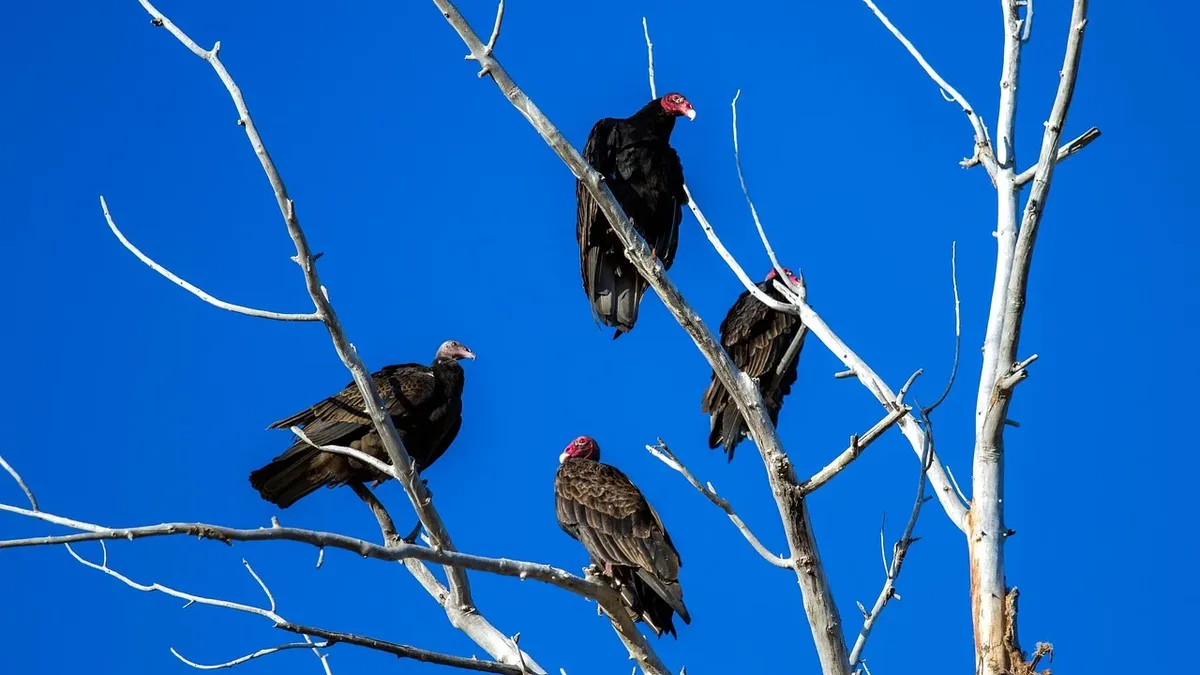
The West African Vulture Conservation Action Plan (WAVCAP), launched two years ago, is making limited progress. Experts interviewed by Mongabay say a lack of coordination, scarce funding, and low political priority are stalling efforts to protect the region's severely threatened vulture populations.
Vultures face intense persecution for belief-based use, poisoning, and habitat loss. The trade in their parts is growing, now impacting other raptors and even spreading to Central African nations like Chad. Researchers warn that without urgent action, countries like Benin and Nigeria risk losing their vultures entirely.
A Grim Picture in Togo and Benin
Togo's vulture population is in crisis. Surveys from 2021 to 2025 showed a sharp decline in critically endangered hooded vultures around abattoirs, with only a few hundred counted nationwide. The white-backed vulture is now presumed locally extinct there, last seen in 2019. "We're now in a situation where it's much harder to find vultures," said Nico Arcilla, president of the International Bird Conservation Partnership (IBCP). "But if you go to the markets you'll see them."
In neighboring Benin, a major trade hub, market surveys reveal the scale of the problem. Unpublished data collected by researcher Abiola Chaffra counted 883 vultures for sale in nine markets in 2023. Later surveys from 2025 to 2026 found 535 for sale across 24 markets. "The fact that vultures continue to be sold... Shows that there is still significant pressure on these species," Chaffra said.
Following its surveys, the IBCP conducted awareness campaigns at slaughterhouses in Togo in 2024 and 2025. "During our awareness-raising activities, many people were unaware of the importance of protecting the hooded vulture," said Yendoubouam Kourdjouak, the IBCP's West Africa project manager. He noted these efforts may have helped stabilize local hooded vulture numbers, offering a glimmer of hope.
An Expanding Threat to Birds
The IBCP's work is part of broader efforts to implement WAVCAP. The plan aims to substantially reduce vulture poisoning by 2029 and help populations recover to sustainable levels by 2040. One clear outcome since its launch is a better understanding of the trade, which is increasing rather than declining.
The crisis is now affecting other species. Researchers recently raised alarms that yellow-billed kites are being captured en masse in Benin to supply fetish markets. They are sometimes shaved and sold as substitutes for hooded vultures, which command higher prices. Ralph Buij, a senior scientist with the Peregrine Fund, said many other raptors and bird species like ibises and storks are also being poached. "It appears to be growing in the scale and volume of birds that are being offered for sale," Buij told Mongabay.
Faced with dwindling local supplies, poachers are looking farther afield. A recent paper highlights vulture population declines in Chad, where poisoning incidents are reportedly intended to supply markets in Nigeria and Benin. "Nowadays, there are increasing reports of cases of vulture poisoning or attempted poisoning in almost every province in the country," said Djekillamber Djekadjim, a co-author of the paper.
Funding and Implementation Hurdles
Translating the conservation plan into action is riddled with challenges. Kourdjouak cited a lack of information on the illegal trade, deeply ingrained cultural practices, poor enforcement of wildlife laws, and chronic underfunding. These issues are consistent across West Africa.
Some localized initiatives are underway. Across Gambia, Guinea-Bissau, and Senegal, BirdLife Africa and partners have engaged 300 traditional healers to encourage replacing vulture parts with herbal remedies. In Benin, groups like IBCP and SOS Savane have conducted awareness campaigns targeting vendors, schoolchildren, and hunters. Despite these activities, experts say little overall progress has been made. "From Benin's perspective... I do not yet see any real translation of the plan's objectives into structured national activities," said Abiola Chaffra.
Joseph Onoja, director of the Nigerian Conservation Foundation, reported some success in promoting herbal alternatives with traditional healers in Nigeria. He stressed, however, that more funding is important. "We need a consolidated fund to be able to really implement the WAVCAP," Onoja said. All experts highlighted funding as a major bottleneck, with available grants often being too small and short-term. "Those sorts of projects don't get us where we need to be," said Ralph Buij, noting typical grants range from $10,000 to $20,000.
Seeking Government Leadership
Substantial government support is widely seen as essential for the plan's success, but it remains lacking. To address this, NGOs and conservation groups plan to meet in Nigeria in November to align implementation efforts, with government representatives from across West Africa in attendance. Joseph Onoja expressed hope that the Economic Community of West African States (ECOWAS) would take a coordinating role. "We will hardly be able to push the needle the right way if the government is not in the driving seat," he said.
Fadzai Matsvimbo, coordinator of BirdLife International's Preventing Extinction Programme, agreed more government advocacy is needed. "We probably need to do some more advocacy to show the stress which vultures are undergoing," she said. There are minor signs of increasing governmental attention. In 2025, several West African nations backed stronger CITES protections for white-backed and Rüppell's vultures. Onoja also pointed to growing momentum against wildlife crime in the region, citing recent convictions for pangolin and elephant trafficking in Nigeria, hoping similar enforcement could extend to vulture cases.