Historic Frog Collection Exposes Chytrid Fungus in Brazil
A study of 1970s-80s museum specimens proves the chytrid fungus Batrachochytrium dendrobatidis drove amphibian declines in Brazil's Atlantic Forest.
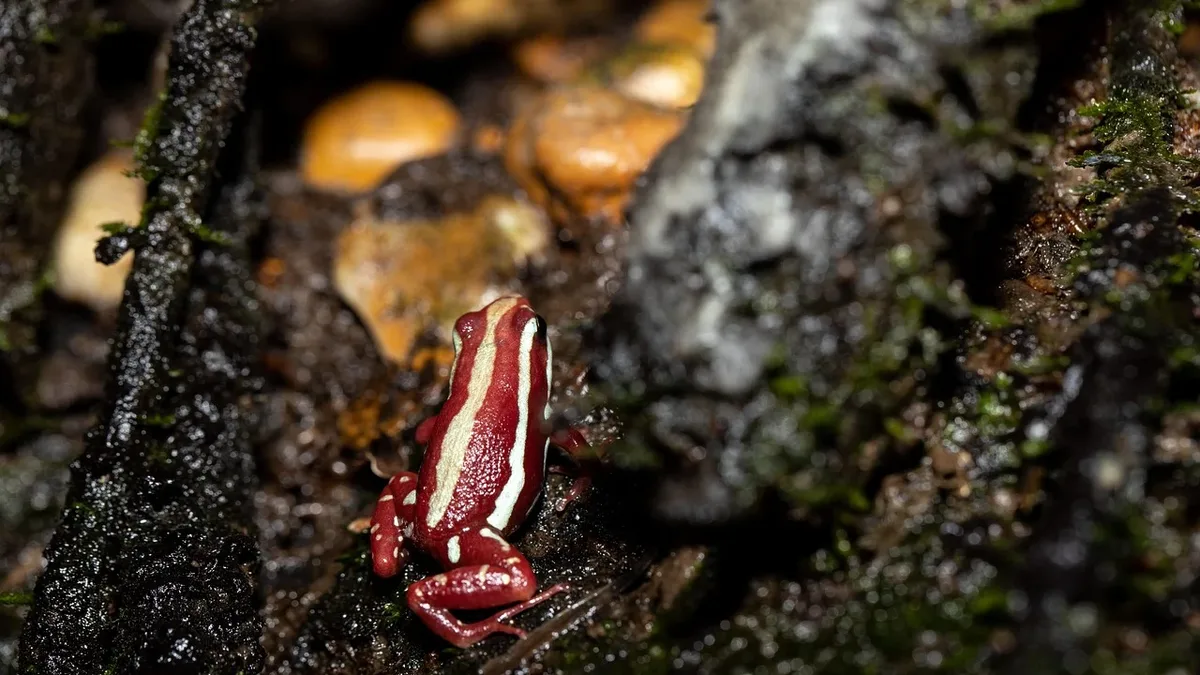
Scientists have documented dramatic amphibian population losses in Brazil's Atlantic Forest during the 1970s and 1980s using preserved specimens. The chytrid fungus Batrachochytrium dendrobatidis (Bd) was absent in frog specimens from 1978 but widespread from 1983 onward, indicating rapid expansion after a period with no collections during the decline. Up to five of the 17 species historically collected at the Boracéia research station may have completely disappeared from the area.
Researchers conducted field research at Boracéia in 2022 and 2024 and found some previously declining species have recovered. The study's authors stated results cannot be extended to the entire Atlantic Forest. The collection contains no animals collected between 1979 and 1982, precisely during the period of sharp amphibian decline.
Disease Link Revealed
Analysis of 370 frog specimens from 17 species proved chytrid fungus emerged in the early 1980s and drove population collapses. Scientists linked the decline to Bd in a study published in Molecular Ecology. The team used PCR testing to detect Bd DNA in the specimens. More than half of the specimens collected in the 1980s carried the fungus.
The pathogen was genotyped, revealing a global strain (Bd-GPL) followed later by a less-virulent strain (Bd-Brazil). The Bd fungus causes fatal infectious skin disease affecting skin function, oxygen uptake, and water and salt regulation. Infected amphibians may develop redness, ulcers, excessive skin shedding, and neurological changes. Notably, some species that suffered the steepest declines showed no detectable infection in preserved specimens, while non-declining species were highly infected.
Temporal Evidence
The unique collection spanning before and after the decline period provides definitive proof of disease emergence timing. William Ronald Heyer, a former curator of amphibians and reptiles at the Smithsonian's National Museum of Natural History, collected the specimens at Boracéia in 1975-1976 and 1983-1988. Jack Boyette, Smithsonian graduate fellow and Pennsylvania State University Ph.D. candidate, was first author on the study.
The detection lag between pathogen emergence and identification delayed understanding of its role in historical declines. The chytrid fungus was first described in 1999 but began devastating populations in the 1970s after emerging in Asia. University of São Paulo researcher Lucas Ferrante noted that detecting the pathogen after population decline is not evidence it caused the deaths. Historical data do not allow conclusive proof of a cause-and-effect relationship.
Current Recovery and Ongoing Threats
Recent fieldwork shows some previously declining species have begun recovering at Boracéia station. Between 2022 and 2024, researchers found 12 of the 17 historical species there, with five species not detected. About 29.5 percent of frogs sampled today carry the fungus, with similar rates in species that crashed and those that did not.
The study demonstrates that museum collections can serve as biological time capsules for investigating disease outbreaks decades later. Bd has driven declines in more than 500 amphibian species globally. A related fungus, Batrachochytrium salamandrivorans (Bsal), threatens salamanders in Europe and could pose a risk to North American salamanders.
The Smithsonian warns that cleaning and drying outdoor gear between waterways, not releasing pet amphibians, and reporting amphibian die-offs can help prevent spread. The research team is now investigating frog specimens from Costa Rica collected before a decline in the Monteverde region. Researchers continue field monitoring at Boracéia to track long-term species recovery.