Indigenous Protest Halts Cargo Traffic on Brazil's Tapajós River
Hundreds of Indigenous protesters boarded soy and fuel barges on the Tapajós River in a two-day demonstration, demanding legal recognition of their territories and protection for the sacred river from industrial expansion.
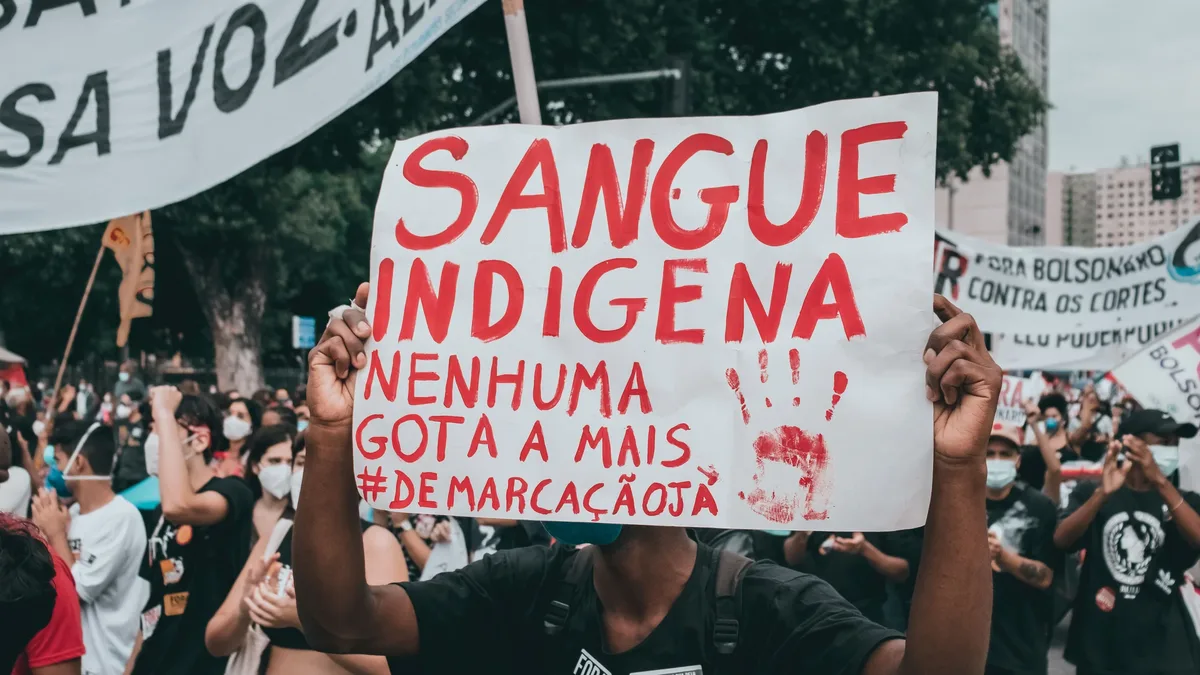
Hundreds of Indigenous protesters halted cargo operations on Brazil’s Tapajós River over land rights concerns. Using several small boats and canoes, they stopped and boarded barges carrying soybeans and fuel in the eastern Amazon on November 14 and 15.
The two-day demonstration near Santarém, in Pará state, drew more than 650 participants. Protesters stopped an oil barge near Pau da Letra on Saturday, November 14. A soybean barge was boarded the following day. The action was part of the ninth Grito Ancestral gathering, involving over 600 people and nearly 20 boats in peaceful demonstrations.
Land recognition remains incomplete
Five Indigenous territories along the Tapajós remain without legal recognition despite ongoing negotiations. Brazil’s national Indigenous affairs agency, FUNAI, has yet to begin studying the land claims for Tupinambá do Baixo Tapajós, Encantados/Kumaruara, Sarambiá, Terra Preta and Arapyun. None of the 12 Indigenous territories in the region has full legal recognition.
The other seven territories are at different stages of the process, some stalled for nearly two decades. FUNAI is currently studying three additional territories: Borari de Alter do Chão, Escrivão, and Munduruku e Apiaká do Planalto Santareno. The status of several others varies significantly.
| Territory | Recognition Status |
|---|---|
| Bragança/Marituba | Physically marked boundaries |
| Munduruku-Taquara | Physically marked boundaries |
| Maró | Scheduled for 2027 |
| Cobra Grande | Scheduled for 2027 |
In May, Brazil’s minister of Indigenous Peoples pushed to speed up the recognition process following a technical visit to the region.
Sacred river central to Indigenous livelihoods
The Tapajós River is vital to Indigenous communities' cultural practices, fishing, and travel traditions. Gilson Tupinambá, chief of the Tupinambá people, stated that the river is sacred, part of their territories and lives, and central to their fishing and travel practices.
It is also a major export artery for the region. The waterway carries large amounts of soybeans and corn from Brazil’s agricultural heartland to ports on the Amazon River. Soy and corn accounted for 88.4% of the Tapajós waterway cargo volume in 2025.
Government faces pressure on dredging and land claims
President Lula faces pressure to fulfill pledges on dredging and land claims. He assured Indigenous leaders in July that a dredging project announced in June would not proceed. Lula pledged again at a September 28 rally in Belém that the Tapajós would not be dredged during his presidency.
Indigenous leaders are demanding accelerated action on land recognition. Lukas Tupinambá, coordinator of the Tapajós and Arapiuns Indigenous Council (CITA), called for clarity on what’s missing in each case, who is responsible, and by when the process will move forward.
Recent wildfires have added urgency to these demands. Fires burned approximately 564 hectares of land claimed by the Borari people. The Federal Police opened an investigation into fires in the Alter do Chão Environmental Protection Area. Borari leaders suspect deliberate fire-setting to clear land for illegal subdivisions.
Jackson Tapajós said, "Our children need this river, just as we need this river." Indigenous leaders will continue monitoring government actions on land recognition and dredging project commitments.