Two Sumatran Rhinos Pregnant at Way Kambas Sanctuary
Two critically endangered Sumatran rhinos are pregnant at Indonesia's Way Kambas sanctuary, with calves due in 2027, offering rare hope for a species with fewer than 80 wild individuals.
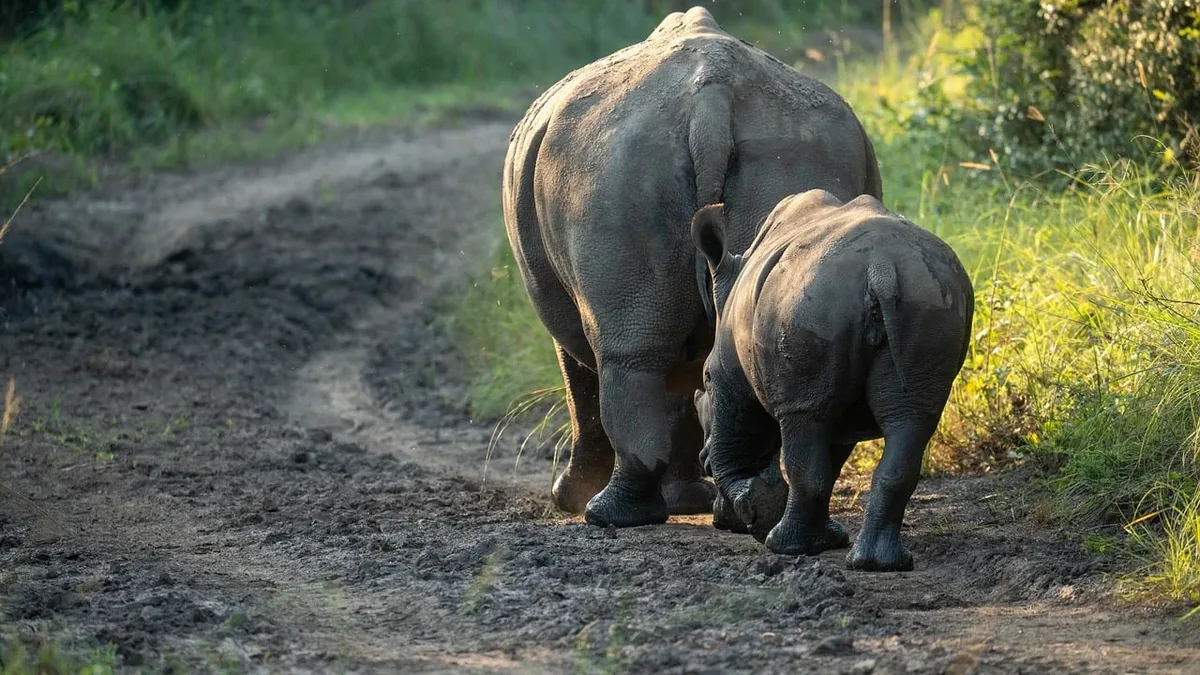
Two Sumatran rhinos are pregnant at the Sumatran Rhino Sanctuary in Way Kambas National Park, Indonesia. The Indonesian Ministry of Forestry and the Indonesian Rhino Foundation (YABI) announced the pregnancies on October 3, confirming that 26-year-old Ratu and her 10-year-old daughter Delilah are expecting calves around May 2027. Both rhinos are among the ten housed at the semi-wild facility, which provides a natural habitat with minimal human contact alongside intensive veterinary and reproductive care. Ratu, captured from the wild in 2005, is carrying her fourth calf. Delilah, born at the sanctuary in 2016, is carrying her second. Their pregnancies have already lasted about eight months.
Significance for the species and breeding program
If Ratu's calf is born healthy, she will become the first Sumatran rhino known to give birth to four calves. The current record of three is held by a female at the Cincinnati Zoo in the United States. The sanctuary's breeding program, established in 1984, has seen five births so far, the most recent in 2023. Success has been hard-won. Ratu suffered two miscarriages before her first live birth in 2012. Another female, Rosa, endured eight miscarriages before delivering a calf in 2022. The program manages all 11 Sumatran rhinos in captivity worldwide. Specialists try to pair the least related animals, but options are severely limited by the tiny population.
Context of the wild population and conservation challenges
The wild population is perilously small. An assessment by the IUCN Asian Rhino Specialist Group estimates only 34 to 47 Sumatran rhinos remain in Indonesia's forests. The largest viable group is in the Leuser Ecosystem in northern Sumatra. The species is listed as critically endangered. Habitat fragmentation has left remaining animals in isolated pockets. Solitary males and females increasingly struggle to find each other to breed, making the captive program essential for the species' survival.
Ongoing care and future outlook
Veterinarians will continue intensive monitoring of both mothers until birth. Sumatran rhino gestation typically lasts 15 to 16 months. After birth, calves may depend on their mothers for up to two years. The breeding program faces profound genetic challenges. All males in the program are related. The two sires, Andalas and Harapan, are full brothers born at the Cincinnati Zoo in 2001 and 2007, respectively. They are the offspring of a wild-caught pair named Ipuh and Emi. This means Harapan is the paternal uncle of Delilah's future calf. Every male in captivity traces his lineage back to that same pair.
Statements from conservation leaders
Officials acknowledge the genetic constraints but stress the urgency of the situation. Nina Fascione, executive director of the International Rhino Foundation, stated, "The current critical situation outweighs the genetic diversity considerations." Jansen Manansang, executive director of YABI, confirmed the care plan, saying, "The SRS medical team will conduct intensive monitoring to ensure that Ratu and Delilah progress well through their pregnancies and give birth to healthy calves." The pregnancies are a milestone in a decades-long effort. They offer a tangible, if genetically complicated, chance for a species on the very edge of extinction. Veterinarians will continue intensive monitoring of Ratu and Delilah until they give birth.