World Dolphin Day Highlights Threats and Conservation
On World Dolphin Day, reports detail threats to dolphins from illegal fishing gear and captivity, alongside observations of novel foraging behavior, as
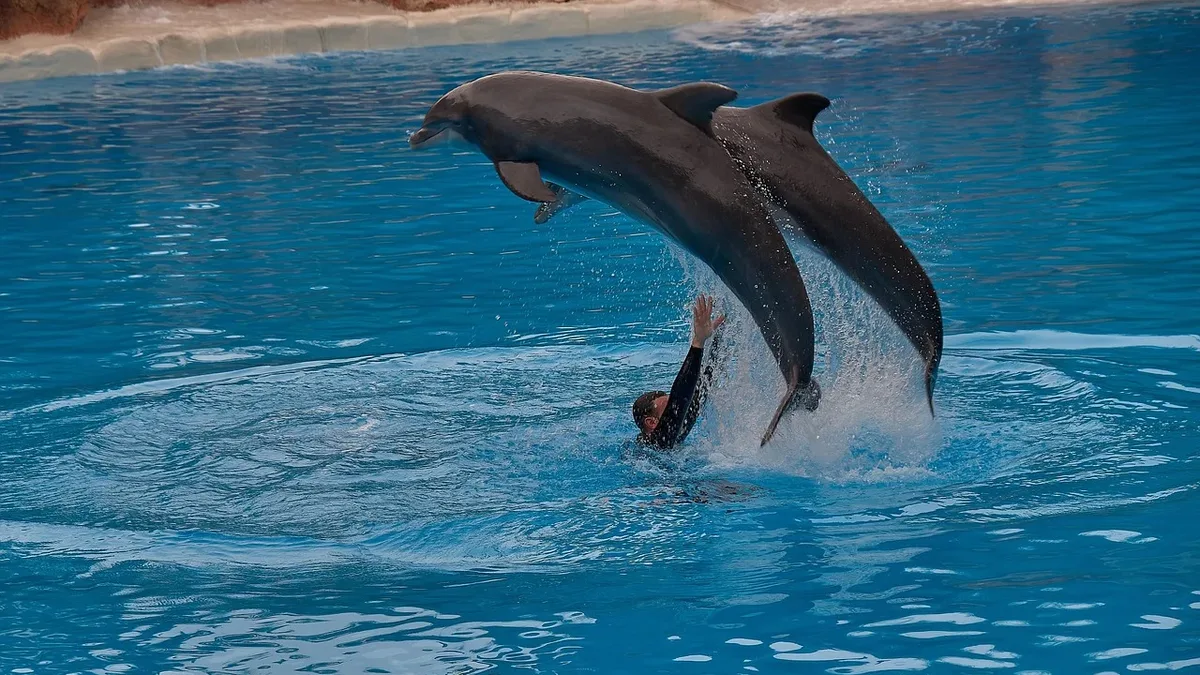
Nine dolphin species, along with several subspecies and populations, are critically endangered or endangered according to the International Union for Conservation of Nature (IUCN). World Dolphin Day, observed on September 12, aims to highlight the threats these mammals face.
A recent reclassification shows the crisis. In late 2025, Lahille’s bottlenose dolphin was moved from vulnerable to endangered status. The IUCN estimates fewer than 400 remain. Their primary threat is bycatch in gillnet fisheries off the coasts of southern Brazil, Uruguay, and Argentina.
Illegal Drift Nets Persist in Mediterranean
Despite a ban, illegal drift net fishing continues to trap dolphins in the Mediterranean Sea. The Environmental Justice Foundation (EJF) found the gear widely used in the Alboran Sea between Morocco and Spain. This practice impacts dolphins, whales, sharks, and turtles.
Jesús Urios Culiañez, an ocean policy officer at EJF, told Mongabay the nets are "having an impact on precious ecosystems in a unique area." The European Union is expected to propose stronger international rules to fisheries regulators in November 2026.
Singapore Resort Halts Wild Dolphin Sourcing
A resort in Singapore has reportedly suspended captive breeding of wild dolphins and stopped sourcing new dolphins from the wild for its oceanarium. As of March, the facility held more than 20 Indo-Pacific bottlenose dolphins. Most are descended from animals captured in the Solomon Islands in 2008 and 2009.
The resort's owner is assembling experts to determine the future of its captive dolphins. Anbarasi Boopal, former co-chief executive of Singapore’s Animal Concerns Research and Education Society, called the move "long overdue progress for animal welfare in Singapore." She emphasized this was contingent on the decision being motivated by welfare concerns.
Novel Foraging Behavior Observed in Australia
Bottlenose dolphins off eastern Australia have been filmed using empty sea snail shells to trap fish. This foraging technique was previously documented only in western Australia, thousands of kilometers away.
Animal ecologist Alexis Levengood, who led the study, described the moment of discovery. "The second I saw it, I was like, oh my God, oh my God, oh my God, this matters," Levengood said. Researchers suspect the shell-use behavior developed independently in the two distant populations.
Conservation efforts mix increased protections with new scientific understanding. The reports compiled by Mongabay for World Dolphin Day show a spectrum from direct human threats to glimpses of resilient animal intelligence.