Chinook Salmon Rapidly Recolonize Klamath River After Dam Removal
More than 13,000 Chinook salmon migrated up the Klamath River in 2025, nearly doubling the 2024 count and reoccupying 88% of historical habitat after the world's largest dam removal.
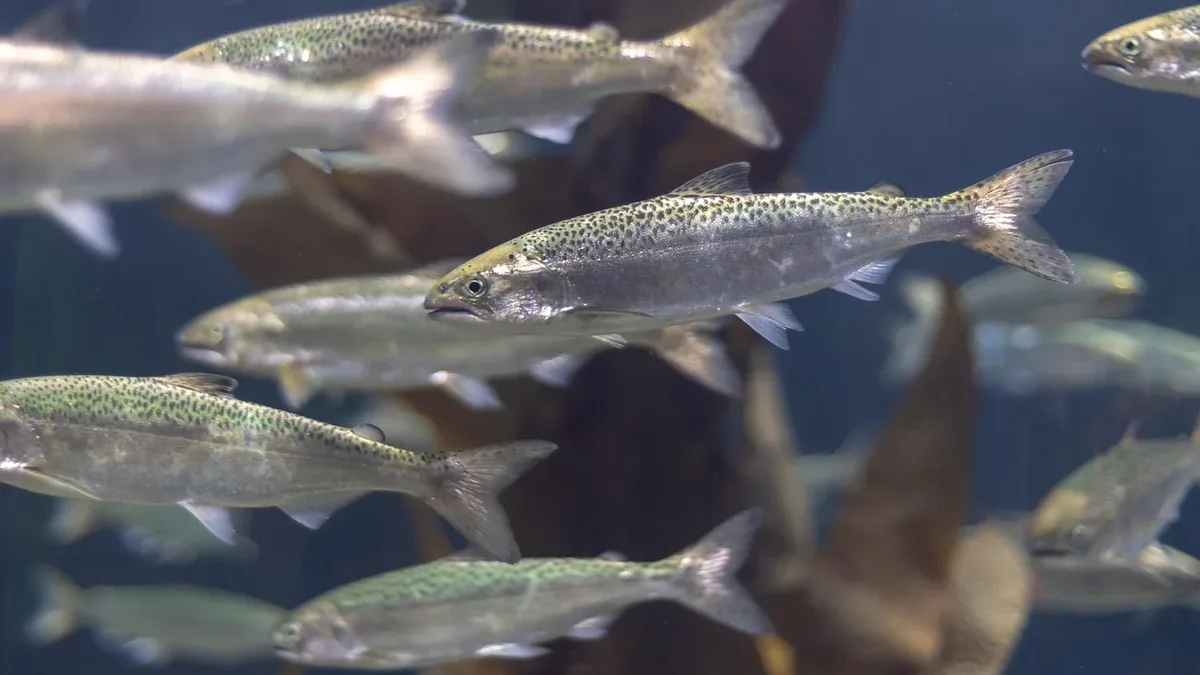
More than 13,000 Chinook salmon migrated up the Klamath River past the former dam sites in 2025. This near-doubling of the 2024 count signals a rapid ecological response to the world's largest dam removal project, which reconnected over 640 kilometers of habitat. The fish have already expanded into 345 kilometers of formerly blocked river, recolonizing 88 percent of their documented historical distribution within just two migration seasons. Researchers estimated that 13,310 Chinook salmon passed the monitoring location in 2025, up from 7,742 the previous year.
Technology and Tracking
Researchers used stationary high-resolution imaging sonar near the former Iron Gate Dam site to monitor the fish. This specialized underwater camera uses sound waves to produce moving images. It operated continuously throughout the fall migrations, from October to December in 2024 and from September to December in 2025. The technology allowed for the measurement of individual fish and the distinction of Chinook salmon from other species.
Damon Goodman, the study's lead author, explained the necessity of this approach. "This technology was particularly valuable because the river remained extremely turbid following dam removal, making traditional underwater video monitoring impractical," he said. The sonar provided highly accurate counts, with the 2025 estimate having a 95% confidence interval between 12,876 and 13,733 fish.
| Year | Estimated Chinook Passage | 95% Confidence Interval |
|---|---|---|
| 2024 | 7,742 | 7,702 to 7,778 |
| 2025 | 13,310 | 12,876 to 13,733 |
Ecological Significance
The salmon's return marks a major step in rewilding the upper Klamath Basin. The population of Chinook salmon that spawned in the river had declined by roughly 90% due to 20th-century damming. In 2024, the fish passing the former dams represented more than 18% of all Chinook returning to the entire Klamath Basin. That proportion grew to 19% in 2025.
The first Chinook was detected passing the former Iron Gate Dam site on October 2, 2024. The following year, the first detection came much earlier, on September 12. The median estimated migration date also shifted earlier, from October 25 in 2024 to October 7 in 2025. Ground surveys documented fish reaching Beatty Gap on the Sprague River, an elevation of 1,250 meters more than 580 kilometers from the Pacific Ocean. To get there, salmon handled through the former dam sites, Class IV+ whitewater, fishways at Keno and Link River Dams, and Upper Klamath Lake.
The upper basin contains broad, relatively low-gradient areas, including spring-fed rivers that can provide critical cold-water habitat. The authors describe its structure as an 'inverted' river basin. They caution that recolonization-movement into and use of restored habitat-is not the same as proving a self-sustaining salmon population has been established.
Context and Collaboration
The removal of four hydroelectric dams in 2024 reopened habitat that had been blocked for more than a century. The project followed decades of activism and negotiations involving Tribal nations, government agencies, and conservation groups, with research documenting particular Karuk Tribal leadership. The four dams removed were J.C. Boyle, Copco 1, Copco 2, and Iron Gate.
| Dam Name | Construction Year | Height |
|---|---|---|
| J.C. Boyle | 1958 | 18 metres |
| Copco 1 | 1918 | 36 metres |
| Copco 2 | 1925 | 7.5 metres |
| Iron Gate | 1962 | 50 metres |
Deconstruction was completed on October 2, 2024. The watershed covers about 40,000 square kilometers and contains more than 30 native fish species. The reopening of the river is a dramatic reversal from 2002, when more than 33,000 adult Chinook salmon died before reproducing during a major disease outbreak.
Study Details
The research documenting this rapid recolonization was led by Damon Goodman and published in Scientific Reports. Scott Hinch, a salmon ecologist at the University of British Columbia who was not involved in the study, spoke to the significance of the findings. The speed of the salmon's return astonished the researchers. Goodman remarked, "What surprised us was the speed and scale of their response, it felt like we were running to keep up with the fish!"
The median estimated migration date for Chinook salmon shifted earlier, from October 25 in 2024 to October 7 in 2025.