Daniela Quintero Investigates Cross-Border
Daniela Quintero, a Colombian journalist and investigations editor for Mongabay Latam, discusses her work on environmental crimes that span national
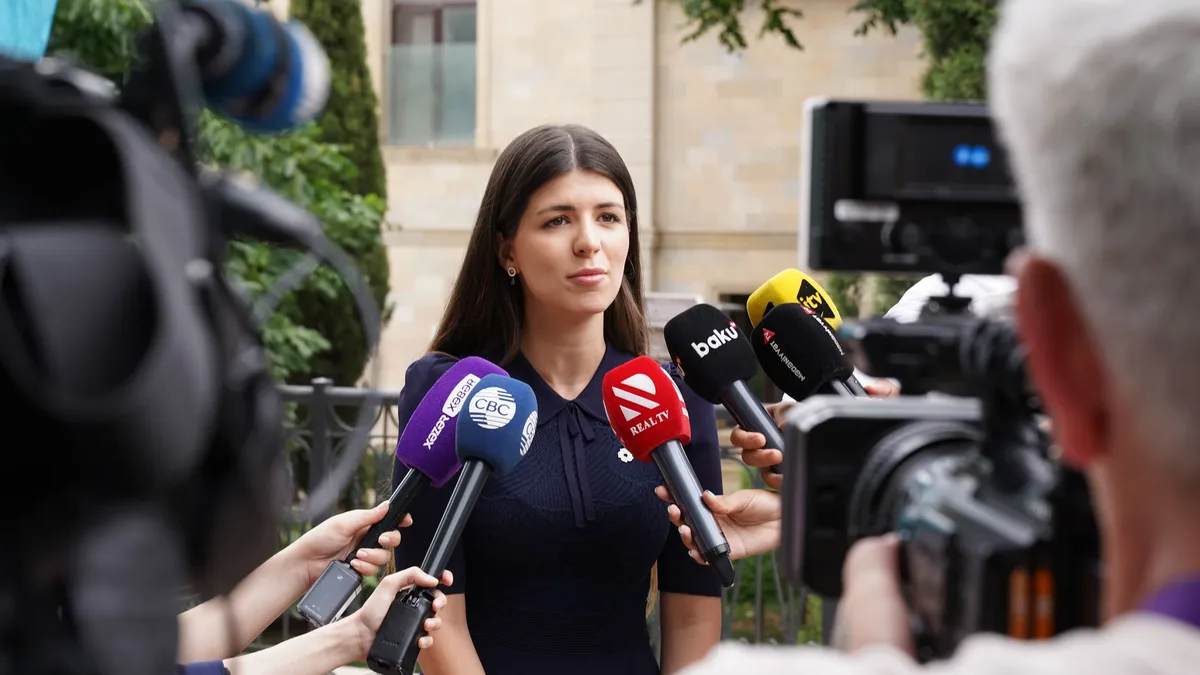
Daniela Quintero is a Colombian journalist and sociologist based in Bogotá. As the investigations editor for Mongabay Latam, she develops cross-border investigations into environmental crimes across Latin America.
Her work combines field reporting with official records, environmental databases, satellite imagery, scientific literature, and legal documents. Quintero spoke with Mongabay founder Rhett Ayers Butler in the Colombian Amazon in July 2025 about her career and methods.
Investigative Methods and Daily Work
Quintero's role involves developing pre-investigations for major projects. She identifies new topics, finds stories in different countries, and locates sources. A significant part of her day is spent reviewing official records and analyzing various data sources to understand how environmental crimes operate and to spot important stories. For deeper insights into environmental trends, journalists can consult our stats page.
She also coordinates the Nature Crimes Fellowship program. This involves five journalists from Peru, Ecuador, and Colombia who have been producing investigations related to nature crimes in oceans and the Amazon for nearly a year. Quintero described it as the first project of its kind in Latin America, providing senior journalists with training and tools for in-depth investigative work.
Once projects advance, she takes on editing tasks and sometimes writes pieces herself.
Career Path and Motivation
Quintero has been a journalist for over eight years. Before joining Mongabay in early 2025, she worked at El Espectador, one of Colombia's main and oldest newspapers. She started there as an environmental journalist and later joined the investigative unit, where she developed in-depth investigations, especially on environmental issues.
She entered journalism at age 17, driven by a desire to write and share stories despite growing up in an environment where the career was uncommon. "I'm naturally curious, and I feel really passionate about understanding and writing about those topics," Quintero said. She finds that journalism allows her to learn new things daily and explore topics beyond her immediate reality.
Her interest in environmental journalism was sparked by early pioneers at El Espectador, who covered the environment rigorously when few others in Colombia were paying attention. She was inspired by their passion for covering topics that typically lacked prominence in a media landscape focused on politics, economics, or conflict.
Scope of Environmental Reporting
For Quintero, environmental stories extend beyond nature. They encompass power dynamics, inequality, corruption, Indigenous rights, organized crime, and the struggles of people protecting their territories. This complexity sustains her interest.
She also merged her passion for journalism with diving to cover underwater stories, a neglected area in Colombian media at the time. Diving offers her a form of active meditation, a quiet escape from a noisy mind where she can observe a completely different world of biodiversity.
Notable Investigations
Quintero highlighted two investigations she is particularly proud of. The first involved glass-eel fisheries in the Dominican Republic about five years ago. She reported on how the entire population of a small town would go to the coast at night to fish for glass eels, or elvers. The story revealed how this local activity was connected to the collapse of eel species elsewhere, as international traders turned to Latin America and the Caribbean to meet demand.
Covering this story was a challenge. She had no prior contacts in the Dominican Republic and secured funding through a journalism network. Spending 15 days reporting on an unfamiliar issue in a foreign country was difficult, but she was pleased with the outcome.
The second investigation, which recently won a national award in Venezuela, was a collaborative project with Mongabay Brasil and colleagues in Venezuela. It documented how illegally mined gold from the Brazilian Amazon was being laundered through Venezuela before being exported globally. High gold prices have fueled illegal mining across the Amazon. As Brazil tightened controls, criminal groups shifted their route through Venezuela. Understanding the broader context of such environmental crimes often requires checking regional standings and injuries to ecosystems.
This project demonstrated the necessity of cross-border collaboration. "Working across three countries also showed me how essential collaboration is in environmental investigations, because these crimes don't stop at national borders," Quintero explained. The investigation was the first to document this specific gold laundering route.