
Migratory Birds
| Common name | Varies by species (e.g., Barn Swallow, Arctic Tern) |
|---|---|
| Adoption context | Supporting conservation organizations |
| Wild status | Protected under international treaties (e.g., Migratory Bird Treaty Act) |
| Human intervention benefit | Habitat protection and pollution reduction are primary helps |
| Original use | Not applicable (wild species) |
| First created | Not applicable (wild species) |
| Country of origin | Varies globally |
| Key threats | Habitat loss, collisions, climate change, pollution |
Origin and history
Migratory birds are not a single species but a vast ecological grouping encompassing thousands of species across all continents. Their evolutionary history stretches back millions of years, with the behavior likely arising in the late Mesozoic or early Cenozoic eras. The phenomenon of migration developed as an adaptive strategy to exploit seasonal resource abundance and favorable breeding conditions across different geographic regions. Major global flyways, such as the Americas' Mississippi and Atlantic routes, the East Asian-Australasian, and the African-Eurasian, were established over millennia through inherited genetic pathways. Human documentation of migration is ancient, with records appearing in the works of Aristotle in the 4th century BCE, though the true understanding of intercontinental journeys only solidified in the last few centuries. The scientific study of migration advanced significantly in the 20th century with bird banding and, more recently, satellite telemetry.
What it was bred for
Migratory birds were not bred for any purpose; they are wild animals shaped entirely by natural selection. Their physiological and behavioral traits are evolutionary adaptations for long-distance travel, not the result of human-directed selection. These adaptations include efficient fat storage for fuel, specialized navigation using celestial cues and Earth's magnetic field, and aerodynamic body shapes. The imperative to migrate is driven by fundamental needs: accessing abundant food during summer breeding seasons and retreating to survivable climates during winter. This life history strategy allows populations to utilize resources across hemispheres, a process that predates human agriculture and civilization. The concept of "breeding" applies only in the context of their natural reproductive cycles, which are inextricably linked to their migratory journeys and specific habitat requirements.
Life cycle
The life cycle of a migratory bird is fundamentally tied to its annual migratory circuit, typically comprising breeding, post-breeding, migration, and wintering periods. Breeding occurs in summer habitats, often at higher latitudes, where long daylight hours support a burst of insect prey for raising young. Following breeding, adults and juveniles undergo a period of hyperphagia, consuming vast amounts of food to build fat reserves necessary to fuel migration. The autumn migration is a perilous journey to wintering grounds, often in tropical or southern temperate regions, where they spend the non-breeding season. The spring migration back to breeding grounds is equally demanding, timed to coincide with the emergence of food sources. This cycle repeats annually, with individuals of some species, like the Arctic Tern, traveling distances equivalent to the circumference of the Earth over their lifetimes.
Character and appearance
There is no single character or appearance for migratory birds, as the group includes diverse forms from warblers to waterfowl to birds of prey. Physically, many exhibit adaptations for endurance flight, such as long, pointed wings in swallows and shorebirds, or powerful breast muscles in geese. Plumage can vary seasonally, with many species displaying brighter breeding plumage for courtship and camouflage. Behaviorally, they are often highly driven by instinctual routines, exhibiting restlessness known as migratory zugunruhe as departure times approach. Their "character" is defined by resilience and precise internal programming for navigation and timing. Appearance within a species can also vary by age and sex, adding to the complexity of identification across their range.
Adopt a Migratory Birds
Formally adopting a wild migratory bird as a personal pet is neither legal nor ethical, as they are protected by international treaties and domestic laws. Many conservation organizations, however, offer symbolic adoption programs where a donation supports research and habitat protection for a species. These programs provide contributors with information about a banded or tracked bird, fostering a connection without removing the animal from the wild. The funds are typically directed toward satellite tracking studies, habitat restoration in key stopover sites, or advocacy for protective policies. It is crucial to understand that such adoption does not confer ownership or any right to interact with the bird. The primary benefit is educational, allowing supporters to follow the challenges and journeys of a wild creature and contribute to its conservation.
How to help Migratory Birds
Effective help requires addressing threats across the entire migratory flyway, not just local areas. Reducing collisions with human structures is critical, achieved by treating glass windows with visible patterns to prevent bird strikes and advocating for "lights out" programs in cities during migration peaks. Protecting and restoring vital habitats, especially stopover sites where birds refuel, is fundamental, which includes conserving wetlands and preventing the degradation of coastal and inland ecosystems. Keeping cats indoors and minimizing pesticide use creates safer local environments in both breeding and wintering grounds. Supporting policies and international cooperation that enforce protections under treaties like the Migratory Bird Treaty Act and the Convention on Migratory Species is essential for large-scale impact. Participating in citizen science projects, such as bird counts, provides valuable data for monitoring population trends and informing conservation strategies.
Overview
Migratory birds represent a complex global ecological network, connecting continents through their seasonal movements. They provide critical ecosystem services, including pollination, seed dispersal, and pest control, across international boundaries. Their populations are declining due to a confluence of human-caused threats, including habitat loss, climate change, collisions, and illegal hunting. Conservation is uniquely challenging because it requires coordinated action across multiple countries with differing laws and priorities. The annual journey is a natural marvel that underscores the interconnectedness of global ecosystems. Their plight serves as a key indicator of the overall health of the environment.
What to know
Migratory birds are legally protected in many countries; interfering with them, their nests, or their eggs without permits is generally unlawful. Their migration is not a choice but a hardwired, genetically programmed behavior essential for their survival. "Helping" a grounded migratory bird often requires expert intervention; contacting a licensed wildlife rehabilitator is the correct action, not attempting care oneself. Many species are in steep decline, with some populations having decreased by more than half over the past fifty years due to anthropogenic pressures. The timing of migration is finely tuned to environmental cues, and climate change is causing dangerous mismatches with food availability. Understanding that conservation must protect the entire flyway, breeding grounds, stopover sites, and wintering grounds, is fundamental to effective action.
Pros and cons
Pros: Symbolic adoption and support for conservation provide a tangible way to engage with global wildlife issues and contribute to vital scientific research. Successful conservation measures, like habitat protection and policy enforcement, can stabilize or recover populations, preserving biodiversity and ecosystem functions. Observing migration can foster a deep personal connection to nature and raise broader environmental awareness. International cooperation for migratory species can serve as a model for diplomatic environmental collaboration. Cons: Well-intentioned but uninformed human intervention, such as taking a grounded bird indoors or feeding inappropriate food, often causes more harm than good and can be illegal. Conservation efforts are frequently fragmented, with strong protections in one country undermined by habitat destruction in another along the flyway. Donations to ineffective or poorly managed organizations may have minimal real-world impact on the threats birds face. The sheer scale of the problem can lead to donor fatigue or a sense of helplessness, hindering sustained support. A common mistake is focusing solely on charismatic species while ignoring the decline of less visible but ecologically crucial insects and other food sources they depend on.
Who it suits
This cause suits individuals who understand conservation as a long-term, systemic endeavor rather than a simple rescue narrative. It is appropriate for those interested in global ecology, policy, and science, who are comfortable supporting efforts where results may be measured in decades, not days. It appeals to people who can derive satisfaction from indirect engagement, such as following the migration map of a tracked bird or advocating for policy changes. This work suits organizations and donors willing to fund the unglamorous but critical aspects of conservation, like land acquisition for stopover habitats or legal advocacy. It is not well-suited for those seeking hands-on interaction with wildlife or quick, visible fixes to complex environmental challenges.
Latest Migratory Birds news
Latest reporting
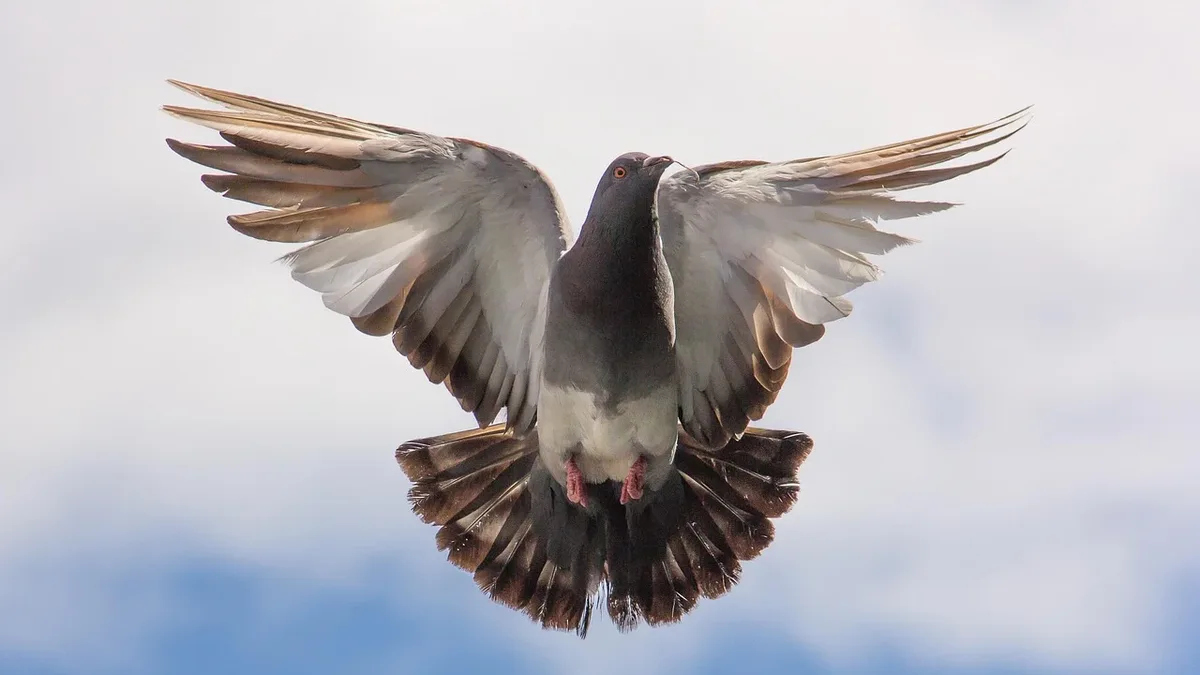
Buzzard Siblings Squabble Over Pigeon Meal on Farm
A trail camera on a Norfolk farm captures juvenile buzzards bickering over a dead pigeon, illustrating the competitive dynamics before the young...

Migratory Bird Extinction Crisis Revealed in Global Report
A new global report states one in nine migratory birds is threatened with extinction, with 45% of species in decline.
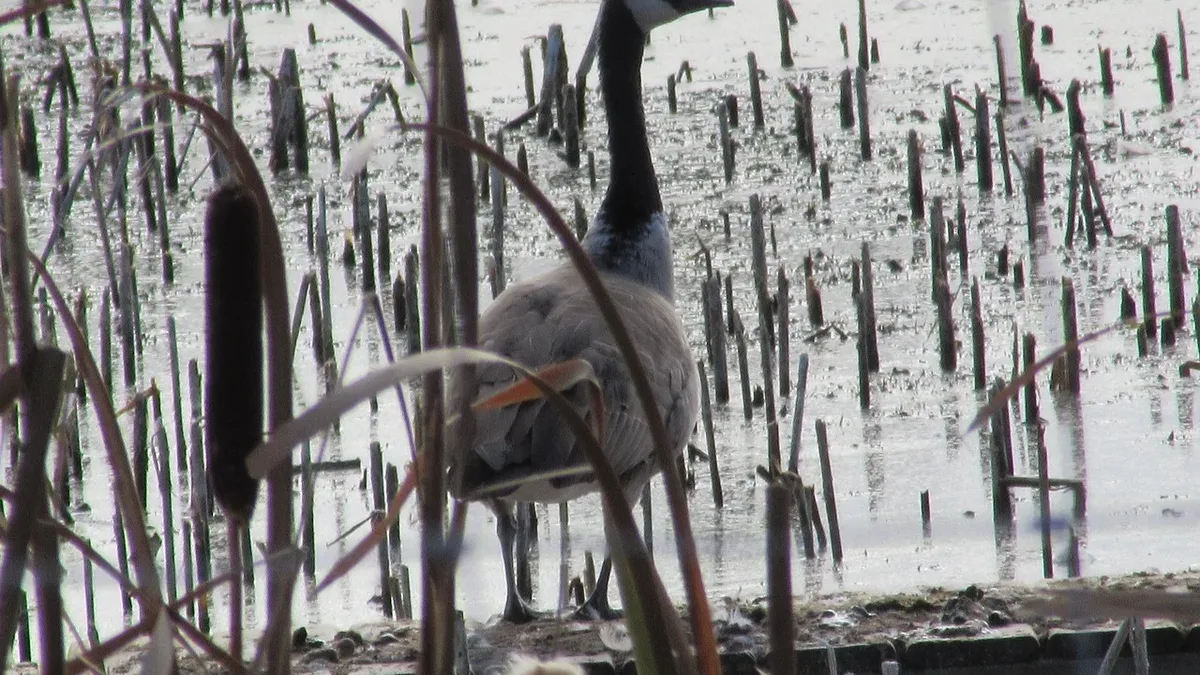
Allouez Bay Wetland Restoration Aids Marsh Birds
Audubon and Wisconsin DNR lead a multi-partner effort to restore critical Lake Superior wetland habitat by controlling invasive cattails, benefiting
Kākāpō Population Tops 300 After Record Breeding
The critically endangered kākāpō parrot population has surpassed 300 for the first time in 75 years, reaching 325 birds after a record breeding...

Wildlife Rescue: Community-Led Conservation Efforts Save Endangered Birds in Latin America
Conservation efforts led by local communities and scientists have helped to recover populations of three endangered bird species in Latin America.

Drones and Raptors: Balancing Monitoring Benefits with Disturbance Risks in Latin America
A decade-long study across eight Latin American countries shows that while drones can access hard-to-reach raptor nests, 81 % of species observed...