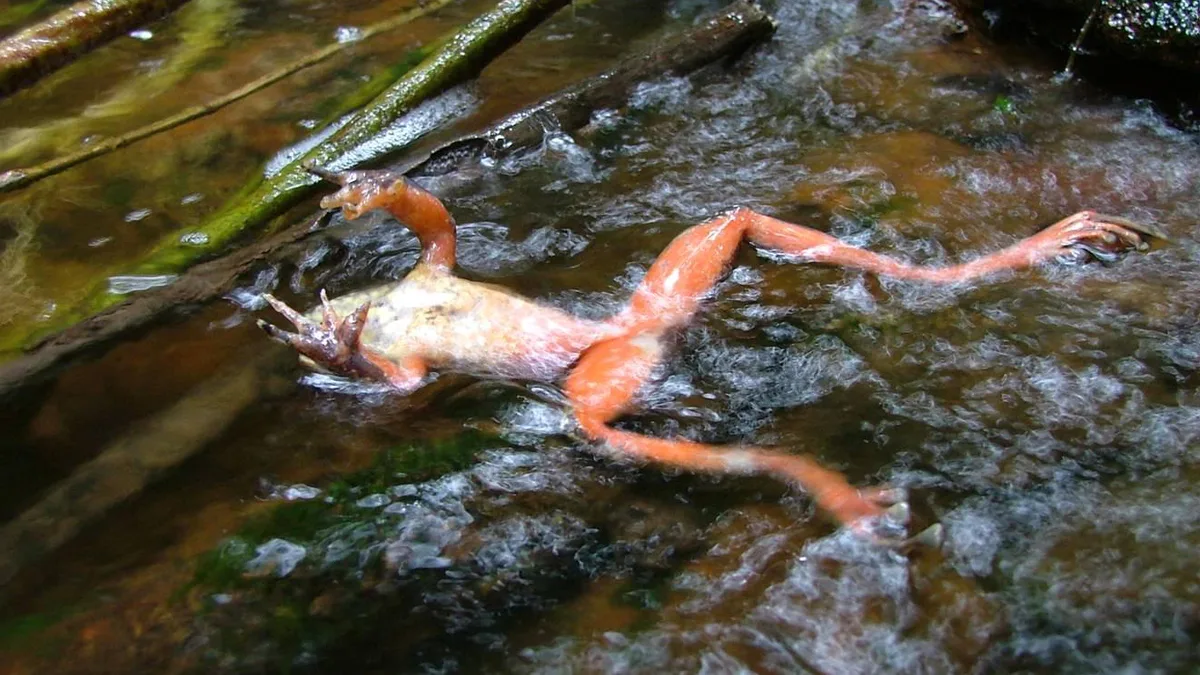
Amphibians And Chytrid Fungus
| Species | Multiple amphibian species (frogs, toads, salamanders) |
|---|---|
| Threat | Batrachochytrium dendrobatidis (Bd) and Batrachochytrium salamandrivorans (Bsal) |
| Primary impact | Chytridiomycosis (skin disease) |
| Intervention goal | Prevent extinction of susceptible species |
| Adoption method | Captive assurance colonies, biosecurity protocols |
| Original use of intervention | Ex-situ conservation, species survival |
| Evidence of success | Variable by species and program |
| Key challenge | Fungus persists in environment, reintroduction difficult |
Origin and history
The chytrid fungus Batrachochytrium dendrobatidis (Bd) is a pathogenic waterborne organism believed to have originated in the Korean peninsula. Its global spread is documented from the late 20th century onward, linked to the international amphibian trade. The related species Batrachochytrium salamandrivorans (Bsal), which primarily affects salamanders, was first identified in the Netherlands in the 2010s following population crashes in fire salamanders. Historical analysis of museum specimens suggests Bd has been present in some regions for decades longer than initial outbreaks indicated. The movement of amphibians for food, pets, and research has been the primary vector for introducing these fungi to naive populations. The crisis represents one of the most severe documented cases of a pathogen driving global biodiversity loss.
What it was bred for
Chytrid fungi are not a bred species but a naturally occurring pathogen that has become invasive due to human activity. They were not created or selectively bred for any purpose. Their proliferation is an unintended consequence of global connectivity and wildlife trade. The fungus exists solely as a parasitic organism, evolving to infect amphibian skin. Human intervention has altered its distribution, not its fundamental biology. The concept of "adoption" in this context refers to conservation efforts aimed at safeguarding amphibian species from this pathogen, not to the fungus itself.
Life cycle
The life cycle of Batrachochytrium dendrobatidis involves both a motile, waterborne zoospore stage and a stationary reproductive stage within an amphibian host. Zoospores, equipped with a single flagellum, swim through aquatic environments to locate a host. Upon contact, they encyst within the keratinized skin cells of an amphibian, maturing into a zoosporangium. This structure produces and releases new zoospores to continue the cycle, often through water or direct contact between amphibians. The fungus thrives in cool, moist environments and can persist in water or moist soil independently of a host for weeks. This environmental persistence makes eradication in wild settings virtually impossible.
Character and appearance
As microorganisms, chytrid fungi are not visible to the naked eye, requiring microscopic examination for identification. Under a microscope, the characteristic spherical zoosporangia embedded in amphibian skin tissue are the primary diagnostic feature. Infected amphibians may exhibit visible clinical signs including lethargy, loss of righting reflex, and abnormal posture. Severe infections often lead to visible skin changes such as thickening, discoloration, sloughing, or ulceration. These physical manifestations result from the fungus disrupting the critical osmotic balance and respiratory function of amphibian skin. The appearance of an epidemic is often a rapid population collapse with dead animals showing few outward signs beyond the general symptoms of illness.
How to help Amphibians And Chytrid Fungus
Helping amphibians threatened by chytrid fungus involves supporting habitat protection, biosecurity measures, and conservation breeding programs. Strict biosecurity protocols are essential to prevent human-facilitated spread; this includes disinfecting footwear and equipment between wetland sites. Supporting the establishment of captive assurance colonies for critically susceptible species provides a hedge against extinction. Advocating for and complying with regulations that restrict the international trade in amphibians can reduce transmission vectors. Donating to or volunteering with organizations that fund chytrid research and mitigation efforts contributes to long-term solutions. Individuals can also create chytrid-free refuges by building wildlife ponds that are not connected to natural waterways and are stocked with locally sourced, disease-free amphibians.
Overview
Chytridiomycosis, the disease caused by fungi in the genus *Batrachochytrium*, is a primary driver of global amphibian declines and extinctions. It affects over 500 amphibian species across all continents where amphibians are found. The pathogen disrupts the critical osmoregulatory and respiratory functions of amphibian skin, often leading to cardiac arrest. Some species, like the American bullfrog, can carry the fungus asymptomatically, acting as widespread vectors. Conservation responses range from attempted eradication in isolated populations to large-scale captive breeding and reintroduction programs. The situation presents a profound challenge in wildlife disease management, balancing intervention with ecological integrity.
What to know
Chytrid fungus is now considered endemic in many regions, meaning complete eradication from the wild is not a feasible goal. Some amphibian populations have shown signs of recovery or increased resistance, suggesting possible natural selection at work. Treatment in captive settings is possible using antifungal medications like itraconazole, but these are impractical for wild populations. The impact of the fungus is highly variable, depending on species, environmental conditions, and fungal strain. Climate change interacts with chytrid dynamics, as temperature and moisture levels significantly affect fungal growth and amphibian immune responses. The most effective current strategies focus on preventing spread to naive populations and preserving genetic diversity of susceptible species through ex-situ programs.
Common questions
A common question is whether amphibians can be cured of chytrid fungus in the wild. While individual amphibians can sometimes overcome infection, population-level cure in an endemic setting is not currently achievable. People often ask if they should treat wild amphibians they find; this is generally discouraged as individual treatment rarely addresses the population-level epidemic and can cause stress. Another frequent inquiry concerns the risk to humans or pets; chytrid fungi pose no known risk to human or mammalian health, being highly specific to amphibians. Many wonder if all amphibians are susceptible; susceptibility varies dramatically, with some species experiencing near-total mortality while others are carriers or fully resistant. A final common question is about the role of climate; cooler temperatures often favor fungal growth and increase disease severity, creating complex relationships with local weather patterns.
Pros and cons
A significant pro of intervention is the demonstrable prevention of immediate extinction for several critically endangered species through captive breeding. Establishing isolated, managed populations in biosecure facilities preserves genetic diversity that would otherwise be lost. However, a major con is that such programs are extremely resource-intensive, costly, and can divert funds from broader habitat conservation. Another common mistake is the well-intentioned but poorly executed treatment of wild populations, which can disrupt local ecosystems and spread the pathogen further. Many conservationists regret that early warnings about the amphibian trade were not heeded, allowing a preventable pandemic to become global. Furthermore, long-term captive breeding can lead to adaptation to captive conditions, making eventual reintroduction more difficult and less successful.
Who it suits
This conservation crisis suits organizations and individuals prepared for long-term, financially demanding commitments with no guaranteed success. It suits researchers specializing in wildlife disease ecology, herpetology, and conservation genetics who can contribute to understanding and mitigation. Dedicated wildlife veterinarians and captive breeding specialists are essential for managing assurance colonies and treatment protocols. It suits policymakers who can enact and enforce strict biosecurity and trade regulations to limit further spread. This work does not suit those seeking quick, visible solutions; progress is often measured in decades and involves confronting frequent setbacks and tragic losses. Ultimately, it is a challenge for the global conservation community, requiring unprecedented levels of international cooperation and sustained funding.