Wildfires Threaten Key Orangutan Research Site in Borneo
Intentionally set wildfires, fueled by a strong El Niño, are advancing on the Cabang Panti research station in Indonesia's Gunung Palung national park
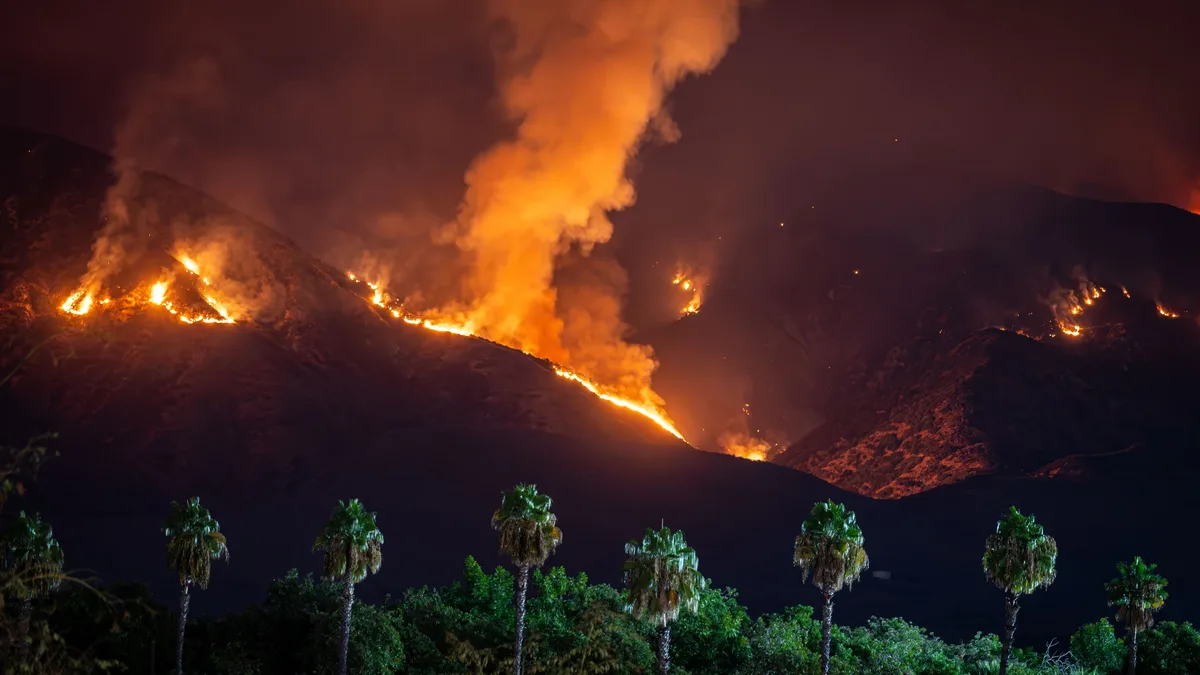
Wildfires in Indonesia are now within 200 meters of the Rangkong research station, a satellite of the main Cabang Panti research site in Gunung Palung national park. The fires threaten one of the world's longest-running studies of wild apes and the habitat of hundreds of critically endangered Bornean orangutans.
Hundreds of Bornean orangutans (Pongo pygmaeus) live near the research stations, with over 2,500 estimated to inhabit the park. Professor Cheryl Knott, a biological anthropologist from Boston University who has led research at Cabang Panti for 32 years, described the scene. "Orangutans are fleeing from these forests. It's just horrible," she said.
The Cause and Scale of the Threat
The fires were mostly set intentionally to clear land, a common annual practice. However, an extremely strong El Niño has created exceptionally hot and dry conditions across Indonesia, allowing the fires to escape control. In West Kalimantan province, some areas have seen little to no rainfall for months.
Scientists warn that, without intervention, the flames could reach the main Cabang Panti research camp in 20 days. Professor Andrew Marshall, an anthropologist from the University of Michigan, emphasized the site's value. "[Cabang Panti] protects what has been, until now, one of the only truly ecologically intact tracts of lowland tropical rainforest in Borneo," he said.
Decades of Research at Risk
Research at Cabang Panti has produced an unparalleled long-term database on wild orangutans, tracking individuals from birth to grandmotherhood. Work there established the orangutan's eight-year reproduction cycle, the longest of any mammal. Without long-term, continuously collected field data, we cannot understand how tropical ecosystems are adapting to or suffering from global climate shifts, Marshall stated.
The fire response is being led by a team of more than 40 people, mostly field assistants, staff, and local villagers. They are fighting day and night, having constructed a firebreak and an improvised sprinkler system using a punctured hose line to saturate the surrounding peat. Keeping the peat wet is a key defense, as peat fires can smoulder underground for months.
A Desperate Fight for Habitat
Caitlin O'Connell, deputy director of the Gunung Palung orangutan conservation programme, said local capacity is overwhelmed. We need large-scale water bombing and skilled firefighters, she said. The impact on the apes is already being witnessed. Wahyu Susanto, research director for the Indonesian NGO Yayasan Palung, reported that five orangutans from the long-term study population were seen fleeing the fire, some only meters from the flames.
Professor Knott questioned the point of saving buildings if the forest is lost. The orangutans need the forest, she said. If all we have left is the building, what are we studying if the orangutans are all gone, and the food they have is all gone? As solitary animals requiring large ranges, orangutans cannot be crowded into small forest fragments.
Indonesian meteorologists predict an intense fire season through October as the El Niño strengthens. Caitlin O'Connell expressed grave concern about the dry conditions lasting for months, suggesting that areas once thought unburnable could completely disappear. The immediate future for the research station and its orangutan subjects remains perilously uncertain.