South Sudan's 6 million antelope migration mapped, faces commercial hunting threat
GPS tracking of 262 antelopes reveals the chaotic routes of the world's largest mammal migration in South Sudan.
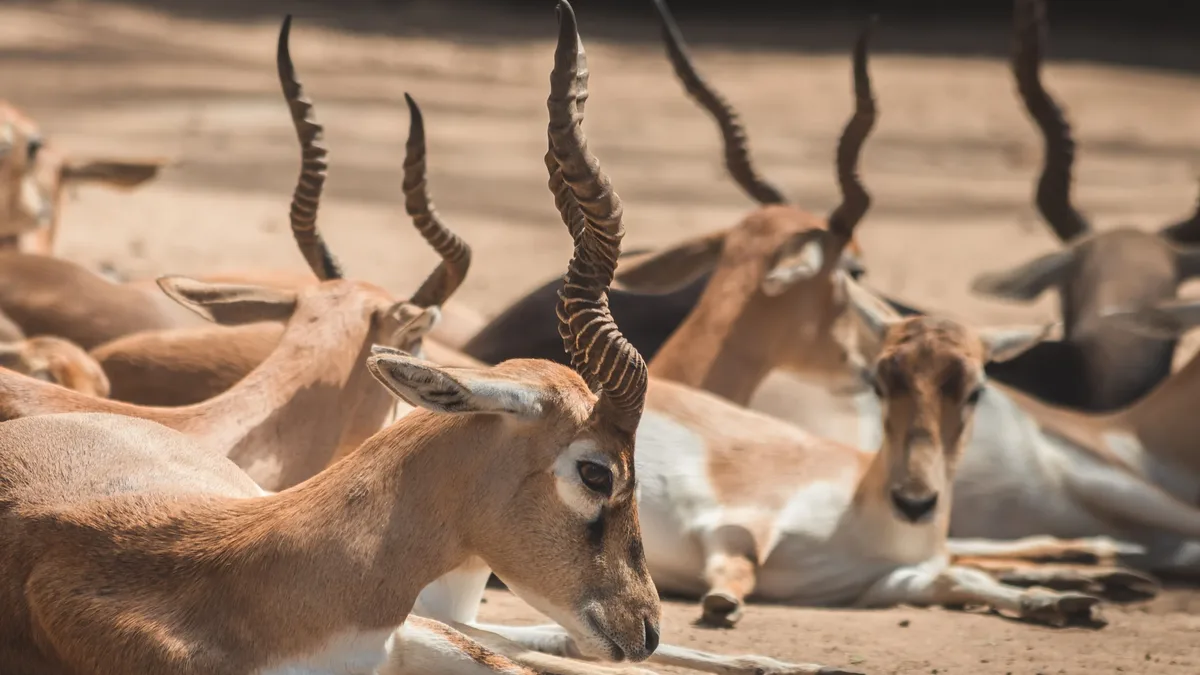
South Sudan hosts the world's largest mammal migration, with approximately 6 million antelopes now tracked via GPS collars. The map of their movements was created by joining up millions of GPS points recorded from 262 migratory antelopes since 2023, revealing the 'lines of life' across the Great Nile Migration Landscape. The tracked herds spend at least 70% of their time outside the boundaries of Boma and Badingilo national parks.
Four species are monitored: white-eared kob, tiang, Mongalla gazelle, and bohor reedbuck. The migration is described as more chaotic than the famous Serengeti movement, with herds shifting in different directions. One white-eared kob traveled nearly 3,000 kilometers in a single year, while one tiang covered 11,573 km in just over three years. During the dry season, the white-eared kob's range is bounded by the White Nile, Akobo, and Sobat rivers. When the rains come, the antelopes move south toward the Kenyan border in search of shorter grass.
Critical Conservation Zone
The migration flows through the 112,000-square-kilometer Boma-Badingilo landscape, a region recently designated a UNESCO World Heritage Site. This vast area of seasonal swamps, woodlands, and grassland supports not only the antelopes but also approximately 1 million people, their livestock, settlements, roads, and mining sites. The central fact for conservation is that the vast majority of antelope movement occurs outside the formal protection of the two national parks.
Commercial Hunting Emerges
A recent and growing threat to the migration is commercial hunting, which violates official bans dating back to 2005. Wildlife biologist Malik Doka Morjan confirms that hunting was historically small-scale but has become commercial recently. This shift is facilitated by new roads and the proliferation of firearms, with meat likely moving to urban markets like Juba and Dima. Conservation manager Megan Claase states that any effective conservation effort must be community-led.
Conservation Strategy
African Parks, which manages the two national parks jointly with the government, conducts extensive aerial surveys to guide protection. The 2025 survey covered approximately 110,000 square kilometers and provided updated population estimates. The data shows no detectable population growth or decline between 2023 and 2025.
| Species | Estimated Population (2025) |
|---|---|
| White-eared kob | 5.17 million |
| Tiang | 440,500 |
| Mongalla gazelle | 191,200 |
| Nile lechwe | 131,700 |
The tracking data is pinpointing critical corridors. Megan Claase noted, "There are some [wildlife] corridors that come out of this, like the high-use areas, which we do now have a better handle on." Inge van den Meiracker emphasized the strategy: "If we’re able to at least protect those critical areas, I think that would make the most impact." One major challenge is a major road between the towns of Bor and Pibor, which the migration routes cross. This road becomes impassable during wet years, but if developed into an all-weather route, it could become a permanent barrier to movement and a focal point for human settlement.