Colombia's Indigenous Guardians Adapt as Pressures Mount
Indigenous Wiwa families in Colombia's Sierra Nevada de Santa Marta are voluntarily moving downslope to preserve community cohesion amid climate change and
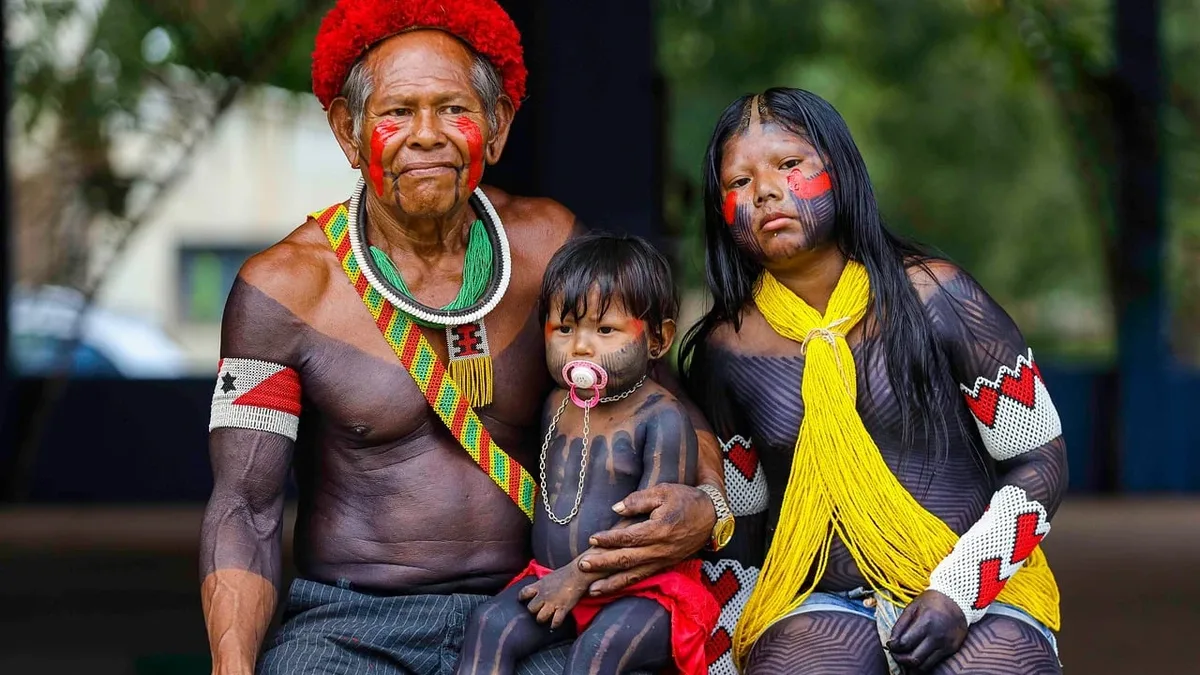
Wiwa families from the community of Gomke are building a new settlement called Shegunamke on lower terrain in Colombia's Sierra Nevada de Santa Marta. Community representatives describe this as a voluntary adaptation strategy to protect social and spiritual cohesion against intensifying climate pressures and the presence of paramilitary groups.
Across the mountain range known as Gonawindúa, or the "Heart of the World," the four Indigenous nations are handle changes driven by agro-industry, legal and illegal mining, paramilitary violence linked to the drug trade, and climate impacts. These pressures threaten ancestral lands and cultural practices. The communities rely on a spiritual and political framework called "the law of origin," which defines the interdependence of Mother Earth and all life, to guide their resistance.
Knowledge as Inseparable from Territory
Within this worldview, the Sierra is a single living organism. The law of origin governs the fragile equilibrium between forests, rivers, wildlife, sacred sites, and human communities. The Indigenous nations view commercial resource extraction as violence against Mother Earth, with minerals like gold and coal understood as her vital organs. Despite this, data analyzed by the Interamerican Association for Environmental Defense shows at least 120 active mining titles and over 90 pending applications overlap the Línea Negra, the ancestral network of sacred sites.
Upholding ancestral responsibilities has grown difficult. Luis Enrique Salcedo Zalabata, governor of the Arhuaco Cabildo, says territorial knowledge risks disappearing when access to sacred sites is restricted by conflict and development. The human cost was seen in Serankwa in March 2026, when a drone-dropped explosive during armed clashes over drug routes seriously wounded a young Arhuaco man and injured several relatives. The family's subsequent displacement separated them from their crops, sacred places, and a territory understood as a living body. "To be a woman is to represent the territory," said the family matriarch. "When a woman is harmed, it also means that the territory is being harmed."
A Spiritual Resistance
The Sierra's complex ecosystems form an interconnected system where damage to one part affects the whole. Wiwa knowledge keeper Roberto Carlos Coronado Calvo sees education as central to cultural continuity. "It allows us to heal the memory," Coronado said. "It allows us to heal the territory." He describes the Línea Negra's sacred sites, rivers, and forests as "living curricula" holding knowledge inseparable from the land.
For Coronado, listening to the natural world is a spiritual practice that guides action. "I hear when the trees or birds speak," he said. "Birds speak like people. I listen when they tell me what is happening or what is going to happen." This informs decisions like leaving acquired forest parcels untouched to protect water sources. "Reciprocity. Care for the trees. Care for the waters. Care for Mother Earth," Coronado stated. "We must protect, conserve and nurture that whole system every day."
Measurable Protections and Ongoing Threats
Centuries of Indigenous stewardship have contributed to significant territorial protections. In 2023, Colombia expanded Sierra Nevada de Santa Marta National Natural Park by 172,458 hectares. Developed with Indigenous councils, the expansion recognizes ancestral governance as an effective conservation mechanism. The park is home to 3,057 recorded wildlife species.
| Category | Detail |
|---|---|
| Total Park Area | 573,313 hectares (1.42 million acres) |
| Recorded Wildlife Species | 3,057 |
| Threatened Species | 49 |
| Endemic Plant Species | 126 |
| Major Rivers Protected | About 18 |
In 2026, Colombia designated 1.5 million hectares of the Sierra as the Corazón del Mundo Renewable Natural Resources Reserve, prohibiting new applications for mining and fossil fuel extraction. However, Colombia's new president, Abelardo de la Espriella, has pledged to expand fossil fuel production and mining, which conflicts with the Indigenous worldview. Coronado argues that protecting the Sierra cannot be left to its Indigenous guardians alone. "When we care for the Sierra Nevada, we care for life," he said. "It belongs to all humanity."