Wasp Nest Reveals Complex Social Colony
A naturalist documented a wasp colony building a football-sized nest in a shed over ten weeks, observing its complex construction and social structure.
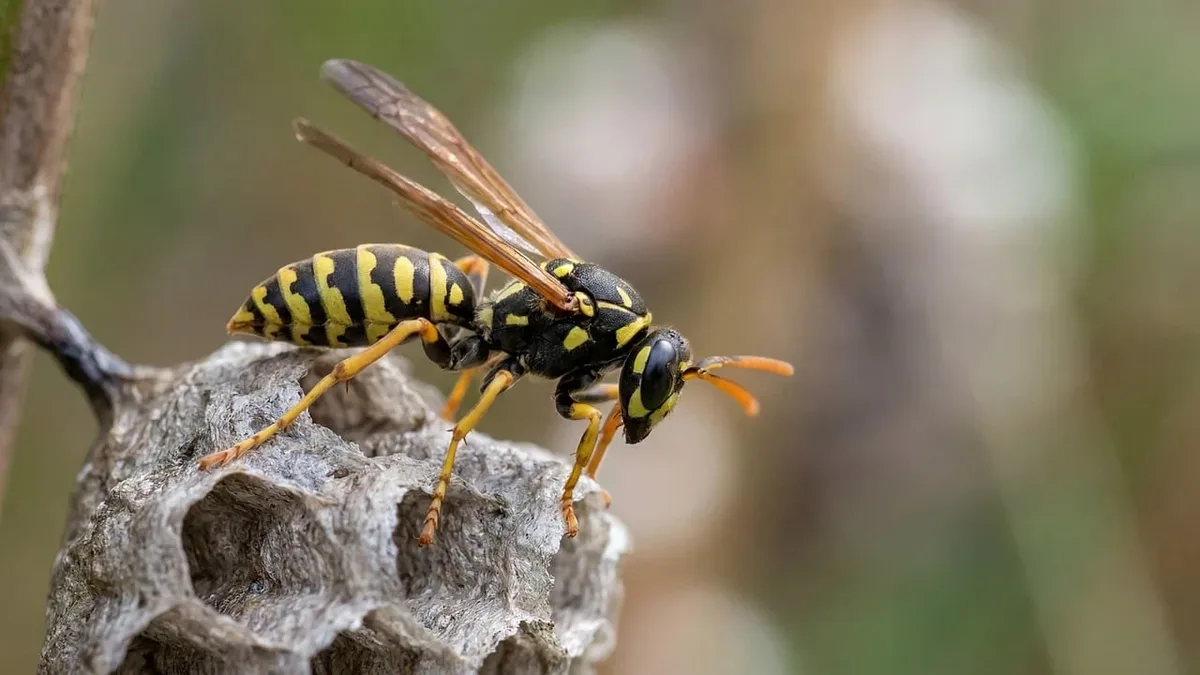
On 9 June, a naturalist discovered a small wasp nest, described as a paper lampshade, hanging from a beam in a garden shed. For the next ten weeks, the shed doors remained closed as the colony of wasps grew and worked.
According to the observer, writing in The Guardian, activity only ceased recently, allowing for an inspection. The nest had expanded to the size of a football. Through photographs, the observer deduced that the worker wasps gathered pulp from at least nine different wood sources, each contributing a distinct colour band to the nest's exterior.
The Nest's Construction
The exterior of the nest was composed of layered bands of pulp-paper, ranging in colour from off-white to cedar red. The observer calculated that roughly five centimetres of the nest's vertical wall contained 36 separate coloured bands. Inside this outer wall were further layers, which the wasps continually refashioned as the colony's needs changed.
It is presumed the interior contained between six and ten suspended, horizontal tiers of brood cells where offspring were raised. A large nest like this can include up to 5,000 worker wasps at its peak, with a cumulative total of 25,000 individuals over the colony's entire lifespan.
The Colony's Social Order and Economy
The entire operation was funded by what the observer called the garden's invertebrate economy. Tens of thousands of insect victims from the garden were presumed to have been harvested to feed the developing larvae. The social structure was complex. Adult worker wasps fed the larvae, and in turn, the adults were fed sugars from the saliva of the younger wasps.
A single queen mother presided over the colony. She chemically castrated her daughters and subdued their own brooding instincts in the interests of the genetic whole, the observer noted. This ensured all efforts were directed toward the survival and expansion of the single family unit.
A Summer's Work of Art
The observer described the finished nest as an exquisite paper sphere, representing a new generation, a family saga, and a sculptural work of art. With the activity now ended, the structure remains as a detailed record of a summer's extraordinary labour, a kind of intricate ghost town suspended from a shed beam.