New Himalayan lake sparks flood fears for Nepal-China border
A newly formed lake in the Himalayas, created by a glacial collapse, is raising fears of further flooding along the Nepal-China border.
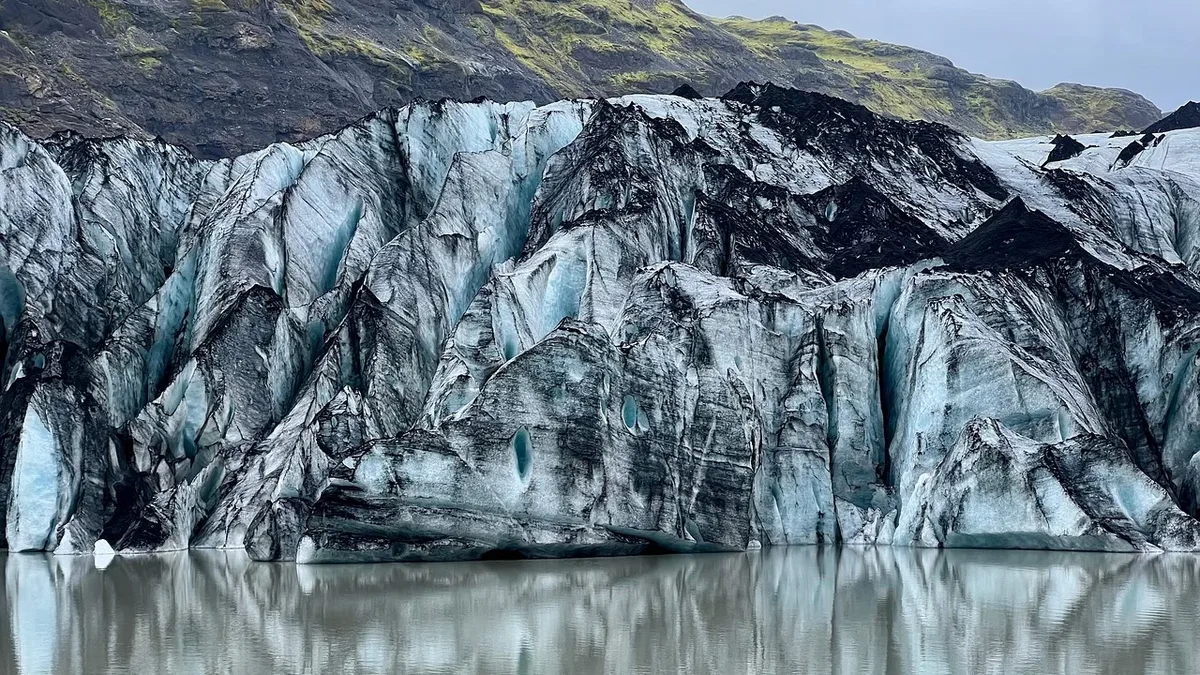
A newly formed lake in the Himalayas is raising fears of further flooding along the Nepal-China border. This comes as rescue operations continue following a catastrophic flash flood on Wednesday, August 26th, that has left hundreds dead and over 1,500 people missing.
Nepalese authorities have instructed all security personnel, rescue workers, and members of the public involved in relief efforts to remain on high alert. They have been told to move to a safe location immediately if necessary. Nepal police spokesperson Abi Narayan Kafle confirmed the rescue operation is continuing under this heightened state of vigilance.
Location and formation
Satellite imagery from Chinese state broadcaster CCTV indicates the lake formed in the same area as the initial glacial detachment event. Nepal's disaster management authority states the river has been blocked upstream, creating a growing lake that could burst. CCTV reported the lake's barrier is more than 10 kilometers (6 miles) from Gyirong Port, a border crossing engulfed by the initial flood. The lake sits at an elevation of 2,950 meters (9,680 feet).
Climate scientists say Wednesday's glacial collapse resulted in several small water bodies forming as debris scattered across the region. Qianggong Zhang of the International Center for Integrated Mountain Development (ICIMOD) explained the situation. "Another dammed lake was formed by the August 26th ice-rock avalanche and this has begun to outflow," said Zhang, who heads climate and environmental risks at the Kathmandu-based group.
The lake holds a few million cubic meters of water, an amount equivalent to roughly 1,200 Olympic-sized swimming pools. Zhang noted it is located in a valley section with a limited elevation drop to downstream areas.
Ongoing risks and expert assessment
With recovery efforts underway, the possibility of another disaster has triggered alarm. Jakob Steiner, a geoscientist at the University of Graz, highlighted the ongoing risks. "There is still a lot of glacial melts going on because of high temperatures and the water is accumulating at various points, as there is bound to be a lot of debris and rock on the river’s path," said Steiner, who is based in Dhaka, Bangladesh.
Both Zhang and Steiner said the alerts should be taken seriously, as many rescuers are putting themselves at great risk. However, they stated it is unlikely a flash flood as devastating as Wednesday's event will happen again. The report, by Sibi Arasu of The Associated Press, concludes with rescue teams working through mud and debris under the shadow of this new threat.