Kearney County Protects Crane Migration from Wind Energy Development
Kearney County, Nebraska, has approved wind energy regulations establishing a seven-mile setback from the Platte River to protect the Sandhill Crane.
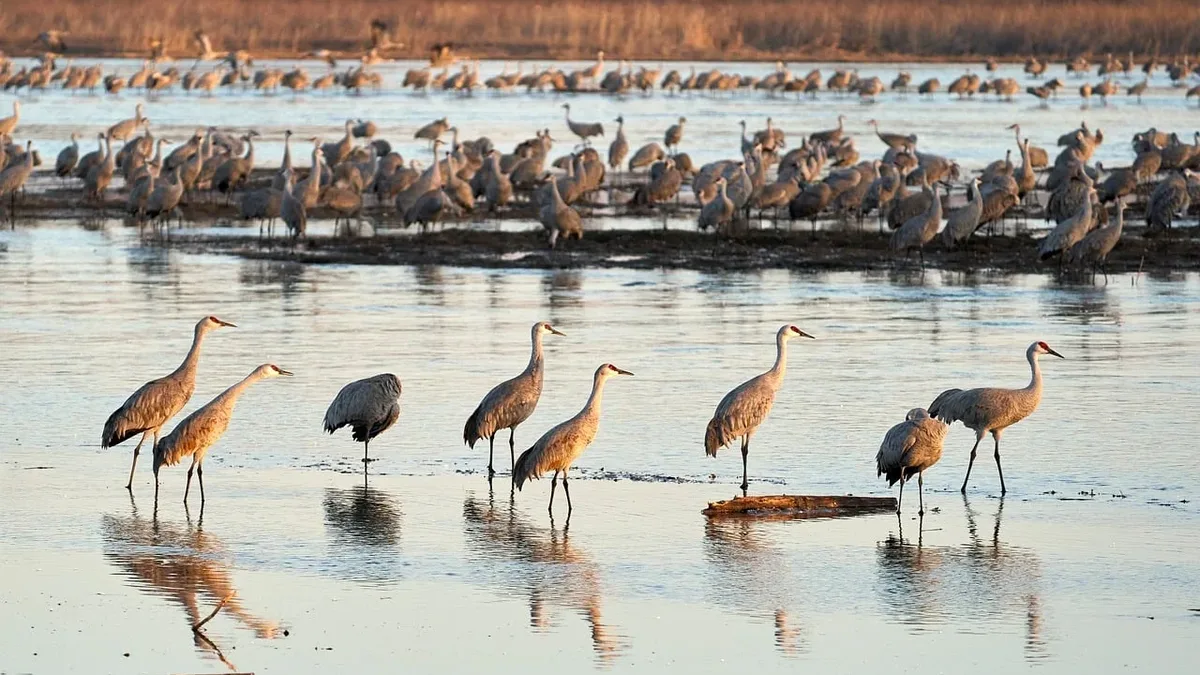
On Tuesday, August 18, 2026, the Kearney County Board of Commissioners approved new wind energy regulations. The rules are designed to protect the Central Platte River's Sandhill Crane migration, a major tourism draw that generates an estimated $28 million annually for the local economy.
Audubon's Rowe Sanctuary, which provided scientific input during the process, praised the decision. The sanctuary stated the regulations support both wildlife and the local economy.
A Critical Habitat and Economic Engine
The Platte River forms Kearney County's northern boundary. Each spring, more than a million Sandhill Cranes use this area as a stopover habitat during their migration north. They rest and feed in the river corridor and surrounding lands.
Protecting this habitat is critical for the birds. It is also vital for local communities. A recent economic impact study found the spring crane migration brings approximately $28 million to Central Nebraska every year. This revenue supports local businesses and jobs through wildlife tourism.
Science-Based Setbacks for Wind Infrastructure
Rowe Sanctuary engaged with the county over several months. It offered public comment and scientific resources on crane migration and responsible energy siting.
The sanctuary used research to recommend specific setbacks from the river for wind energy projects. Studies show cranes regularly use habitat up to roughly three miles from the Platte River. Further research indicates cranes tend to avoid large wind infrastructure within a similar three-mile distance.
Based on these findings, Rowe Sanctuary suggested a minimum six-mile buffer to reduce impacts on the cranes and their habitat. The county ultimately approved an even more protective setback of seven miles from the Platte River.
Balancing Clean Energy and Conservation
Rowe Sanctuary's involvement reflects Audubon's broader approach to clean energy development. The organization supports the transition to renewable energy, recognizing climate change as a major threat to birds. However, it emphasizes the need to site new energy infrastructure in locations that avoid the most important habitats.
Audubon's work focuses on science-based planning and responsible siting. The goal is to identify places where renewable energy can be developed with fewer conflicts for wildlife. The Kearney County regulations are presented as a practical example of this balance.
Renewable energy development is seen as an important part of the future. The specific placement of that infrastructure, however, is described as incredibly important. By establishing the seven-mile setback, Kearney County has acted to protect one of North America's great wildlife spectacles.
Rowe Sanctuary framed the decision as a success of people coming together around shared values. It thanked the Board of Commissioners for engaging the public and considering the available science. The sanctuary stated the outcome helps ensure future generations can experience the cranes gathering along the Platte River each spring.