Bass Rock gannets face 15-year flu recovery
A study by the RSPB and Aarhus University finds the Bass Rock gannet colony, hit by bird flu in 2022, will need at least 15 years to recover its numbers.
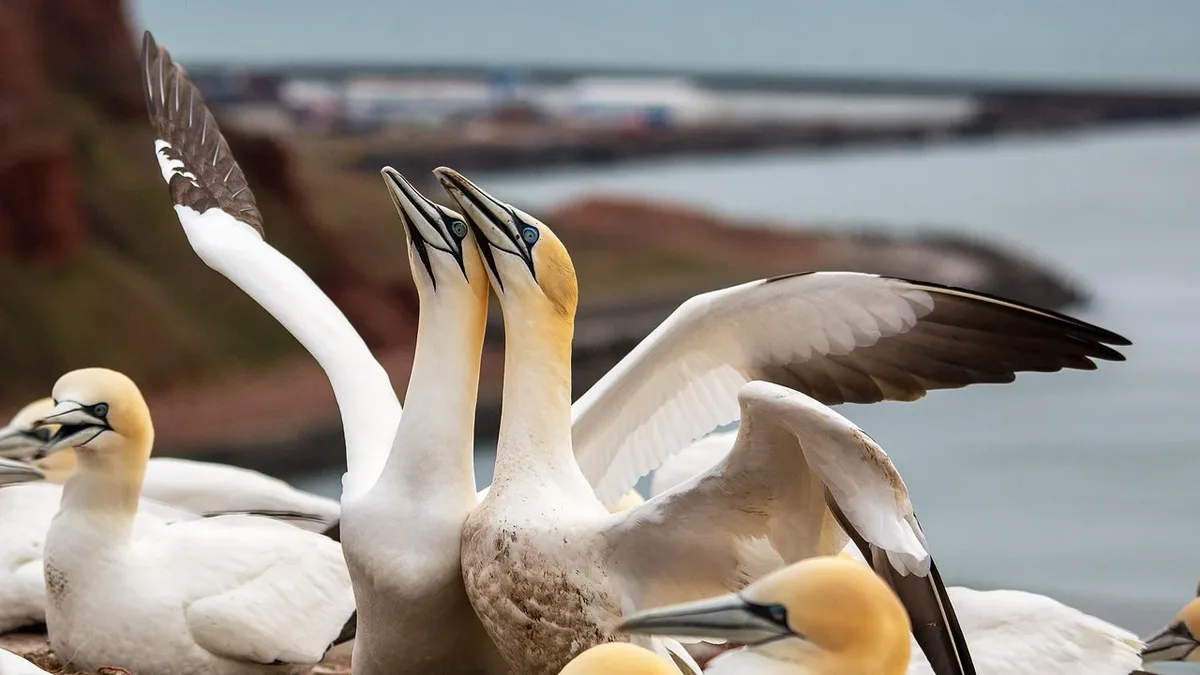
The gannet colony on Scotland's Bass Rock will need at least 15 years to recover from a devastating bird flu outbreak that began in 2022. This is the conclusion of a recent study conducted by the RSPB, which now owns the island, and researchers from Aarhus University. You can see the impact on wildlife populations in our stats section.
Around 100,000 gannets currently call the volcanic rock home, but that number is a fraction of its former population. The highly pathogenic avian influenza, which arrived at the colony in 2022, has significantly reduced their numbers. For the surviving birds, the disease has left a visible, eerie mark: their typically vivid blue irises have turned black.
A slow path to rebound
The research indicates a long road ahead for the seabirds. The study's authors estimate a recovery timeline of a minimum of 15 years for the population to return to its pre-outbreak strength. This slow pace highlights the severity of the impact on a colony so central to the species that it bears the island's name in its scientific classification, Morus bassanus.
While the gannets struggle, other birdlife continues in the shadow of human history. A mile across the water from Bass Rock stands the 700-year-old ruin of Tantallon Castle, a stronghold for house martins. These small birds, whose national numbers are in shocking decline, build their mud-and-saliva nests in the red sandstone and raise their broods before migrating to wintering grounds in Africa, locations that remain largely mysterious to scientists.
Contrasting fortunes on the Forth
The scene presents a stark contrast in avian resilience. The house martins at the ancient castle represent a fragile but persistent population, while the massive gannetry on the even more ancient Bass Rock, a 340-million-year-old volcanic plug, faces a generational challenge. Observers can watch the gannets from the castle grounds, seeing them swarm the distant island like midges before executing their characteristic hunting dives.
Their hunting skill is a breathtaking spectacle. The birds wheel in broad arcs, pause, tuck their wings, and plunge into the sea like sleek bullets, producing barely a splash. This innate prowess for survival is now being tested by an unprecedented threat. For more on how teams and players adapt to challenges, see our squad analysis.
The physical toll on survivors
The most immediate and visible sign of the disease's legacy is the change in the gannets' eyes. The study notes that survivors of the flu outbreak exhibit a permanent alteration: their distinctive blue irises have become black. This physical remnant serves as a constant reminder of the pathogen that swept through their ranks.
The RSPB, as the island's owner, now manages the site with this long recovery in mind. The study provides a sobering timeframe for conservationists and highlights the lingering, visible effects of the epidemic on individual birds. The future of the colony hinges on giving these birds the half-chance they need to eventually rebound.