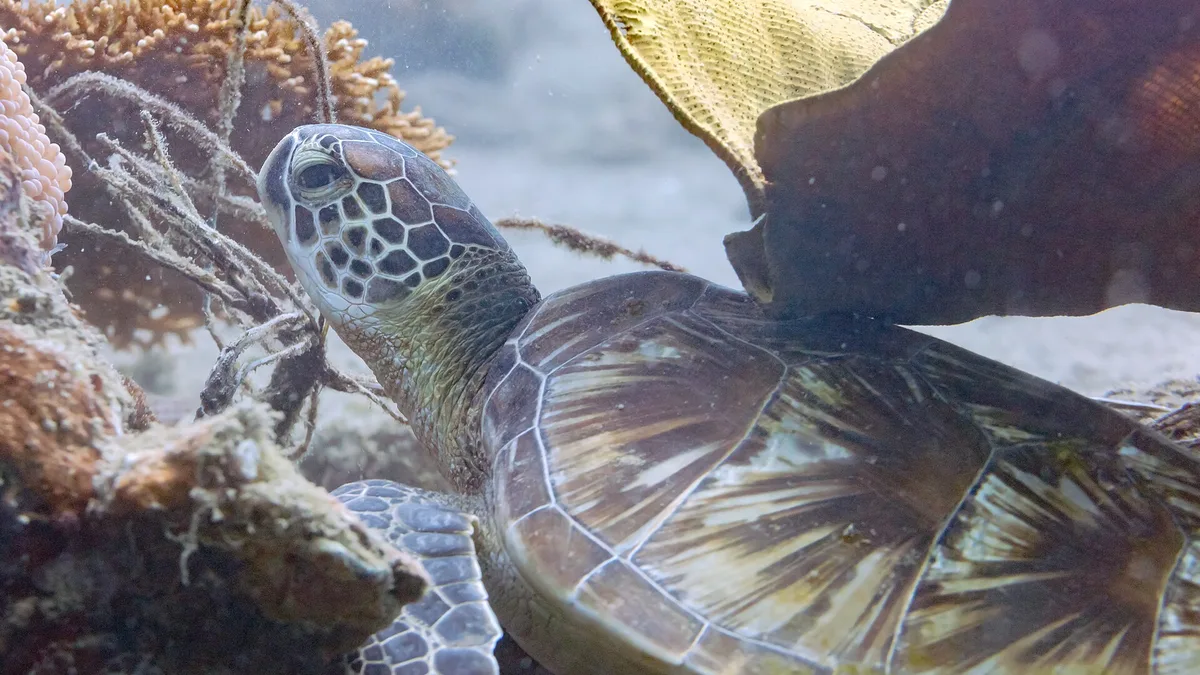
Tortuga Marina Verde
| Scientific name | Chelonia mydas |
|---|---|
| Country of origin | Tropical and subtropical oceans worldwide |
| First documented | 1758 (by Carl Linnaeus) |
| Original use | N/A (wild species) |
| Conservation status | Endangered (IUCN Red List) |
| Adult size | 80 to 150 cm carapace length |
| Adult weight | 65 to 200 kg |
| Primary threats | Bycatch, habitat loss, climate change, pollution |
| Human intervention efficacy | Mixed; protection of nesting beaches is highly effective, other threats more complex |
Origin and history
The Tortuga Marina Verde, commonly known as the green sea turtle (*Chelonia mydas*), is a marine reptile with a natural history spanning millions of years. Its evolutionary lineage dates back to the Late Cretaceous period, with modern forms established well before the Pleistocene epoch. The species has no single country of origin but has a circumglobal distribution in tropical and subtropical coastal waters. Documented human knowledge of the species extends back centuries, with its formal scientific description and classification occurring in the mid-18th century. Historically, populations were abundant in all major ocean basins, from the Atlantic to the Pacific and Indian Oceans. These ancient migratory patterns have been shaped by ocean currents and the distribution of seagrass beds, their primary food source.
What it was bred for
The green sea turtle is a wild animal and is not a domesticated or bred species in any traditional sense. It was not selectively bred for human purposes such as labor, companionship, or specific aesthetic traits. Historically, however, the species has been heavily exploited by humans for various uses, which has shaped its population trajectory. For centuries, and particularly from the 18th century onward, these turtles were hunted intensively for their meat, which was considered a delicacy and a source of protein. Their eggs have been harvested from nesting beaches for human consumption. Additionally, their fat and cartilage were rendered for oil, and their beautifully patterned shells were used in the manufacture of jewelry, ornaments, and other luxury items known as "tortoiseshell." This unregulated harvest was the primary driver of its initial population declines.
Life cycle
The life cycle of the green sea turtle is complex and perilous, spanning decades and vast oceanic distances. It begins when a female excavates a nest on a sandy beach and deposits a clutch of approximately 100-200 ping-pong ball-sized eggs. After an incubation period of about two months, the hatchlings emerge, usually at night, and scramble to the sea, facing high predation from birds, crabs, and other predators. Those that survive enter an oceanic pelagic phase, spending several years drifting in open ocean currents, often associating with floating seaweed mats. As juveniles, they transition to neritic zones, taking up residence in coastal bays, estuaries, and shallow seagrass beds. They reach sexual maturity only after 20-50 years, at which point they undertake long-distance migrations, often spanning hundreds or thousands of kilometers, to return to their natal region to mate and nest, completing the cycle.
Character and appearance
The green sea turtle is a large, air-breathing reptile with a streamlined shell, or carapace, adapted for life in the sea. Adults typically possess a smooth, heart-shaped carapace that varies in color from olive-brown to black, often with radiating patterns. The common name "green" derives not from the shell color but from the greenish hue of their subdermal fat, a result of their herbivorous diet. Adults have a relatively small, blunt head with a serrated lower jaw, well-suited for tearing seagrass and algae. Unlike other sea turtles, they are primarily herbivores as adults, feeding almost exclusively on marine vegetation. Their character is generally described as solitary and migratory, with individuals exhibiting strong natal homing instincts, but they are not territorial and are often observed resting on the seafloor or basking on the surface.
Pros and cons
A primary "pro" of the green sea turtle's existence is its critical ecological role; as a major grazer of seagrass, it maintains the health and productivity of these vital marine ecosystems, which serve as nurseries for many fish species. Its nesting activities also help cycle nutrients from the ocean to nutrient-poor beach dunes. However, a significant "con" is its extreme vulnerability due to a life history characterized by late maturity, low reproductive output, and high juvenile mortality, making population recovery from declines exceptionally slow. A common mistake in human intervention is focusing solely on protecting nesting beaches while neglecting the myriad threats turtles face in their foraging habitats and migratory corridors, such as fisheries bycatch and habitat degradation. Many well-intentioned conservation programs regret overly simplistic approaches, such as relocating eggs or creating hatcheries, which can alter hatchling fitness and sex ratios, potentially doing more long-term genetic harm than good if not meticulously managed.
Who it suits
The green sea turtle does not "suit" human ownership or direct companionship; it is a wild animal unsuited for captivity outside of accredited rehabilitation and research facilities. It suits the role of a keystone species within healthy tropical and subtropical coastal and marine ecosystems. Its preservation suits dedicated, long-term, and well-funded international conservation initiatives that can address threats across its entire migratory range. It suits researchers and conservation biologists committed to multi-decadal studies due to its long generation time. Ultimately, the survival of the green sea turtle suits a global society willing to implement and enforce sustainable fishing practices, protect critical habitats on land and sea, and mitigate climate change impacts on nesting beaches and ocean ecosystems.