Murcielago Frutero
| Country of origin | Central and South America |
|---|---|
| First documented | 18th century |
| Original use | Seed dispersal for rainforest plants |
| Conservation status | Varies by region, from Least Concern to Vulnerable |
| Primary threat | Habitat loss from deforestation |
| Human intervention impact | Varies; protected reserves effective, relocation often unsuccessful |
| Diet | Frugivorous (fruit-eating) |
| Roosting | Colonial, in tree hollows and caves |
Origin and history
The Murciélago Frutero, commonly known as the Jamaican fruit bat, is a species of leaf-nosed bat indigenous to the Neotropics. Its documented scientific history begins in the early 19th century, with formal descriptions by naturalists in the 1810s. The species is not a product of human breeding but a naturally evolved mammal with a deep evolutionary history in the region. Its range extends from southern Mexico through Central America into northern South America, including Trinidad and Tobago. Fossil records and genetic studies indicate its lineage has been present in these forests for millions of years. The common name "Frutero" directly references its primary ecological role as a frugivore, or fruit-eater, a trait central to its existence long before human observation.
What it was bred for
As a wild animal, the Murciélago Frutero was not bred for any human purpose; it is a product of natural selection. Its physiological and behavioral traits are adaptations for a nocturnal, fruit-based diet within forest ecosystems. The species plays a critical ecological role as a seed disperser, co-evolved with many tropical fruit-bearing plants. Its foraging behavior facilitates forest regeneration by carrying seeds away from parent trees. Unlike domesticated species, its characteristics, such as its leaf-shaped nose and wing structure, serve functions like echolocation and flight maneuverability in dense habitats. Human cultivation or breeding programs for this species do not exist, as it remains a wild, free-ranging organism integral to its native environment.
Life cycle
The life cycle of the Murciélago Frutero begins with a gestation period of approximately three to four months, typically resulting in a single pup. Females give birth annually, with timing often synchronized with regional fruit abundance to ensure adequate milk production. The altricial young are carried by the mother for several weeks until they are too large, after which they are left at night in maternity roosts. Juveniles achieve flight capability at about one month of age and are weaned by two months, though they may remain near maternal roosts for some time. Sexual maturity is reached within the first year, and individuals in the wild can live for over ten years, though average longevity is likely shorter due to predation and environmental factors. Their social roosting behavior in caves, hollow trees, and man-made structures is consistent throughout their adult life, with colonies often comprising both sexes.
Character and appearance
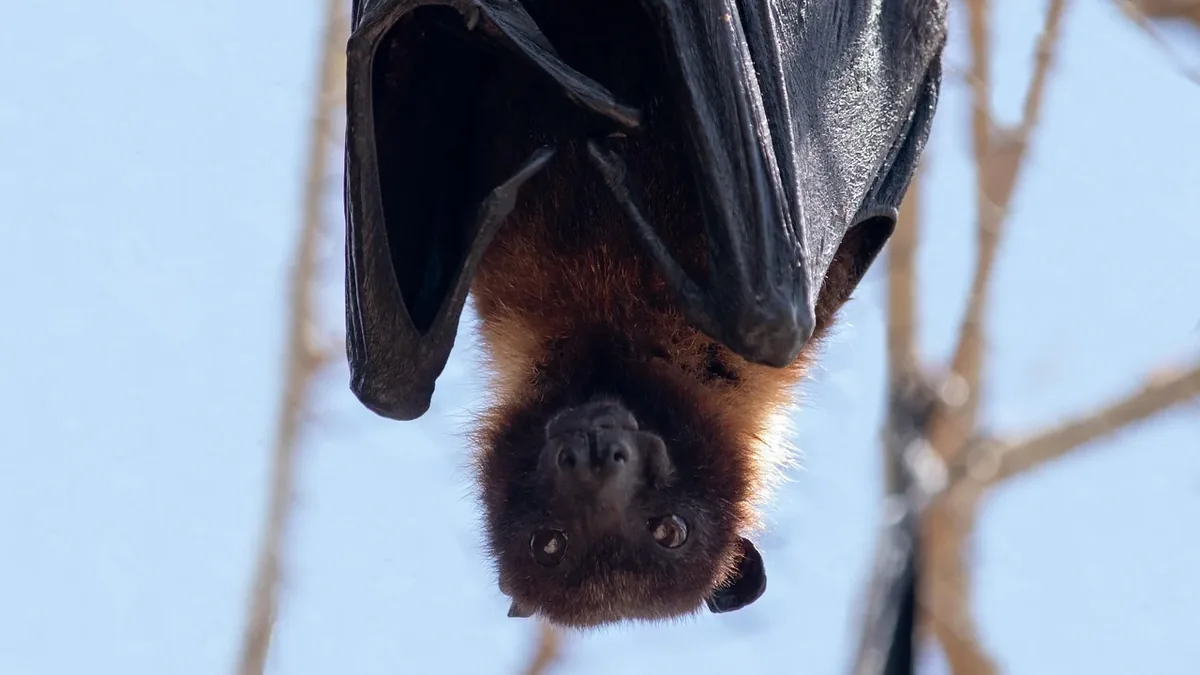
The Murciélago Frutero is a medium-sized bat with a wingspan typically ranging between 30 and 40 centimeters. Its most distinguishing feature is a simple, spear-shaped nose leaf, which aids in directing its echolocation calls. The fur is generally soft and dense, exhibiting colors from dark gray to reddish-brown or orange-brown on the dorsal side, with paler underparts. Its face is characterized by large, dark eyes reflective of its reliance on some visual cues alongside echolocation for navigation. The species exhibits a generally calm temperament when roosting but is a strong, direct flier when foraging. In hand, individuals are typically not aggressive unless severely provoked, often choosing flight over confrontation as their primary defense strategy.
Pros and cons
A primary advantage of the Murciélago Frutero is its significant ecological benefit as a seed disperser, contributing directly to tropical forest health and plant diversity. Its adaptability to various forested and even some disturbed habitats has allowed it to maintain stable populations in many parts of its range. However, a major con is its high susceptibility to habitat fragmentation, which severs crucial corridors between feeding grounds and roosting sites. The species is also vulnerable to direct persecution by humans who mistakenly view it as a pest to fruit crops or fear it due to misinformation about disease. A common mistake in conservation is focusing solely on protecting known cave roosts while neglecting the essential foraging landscapes that surround them. Many well-intentioned interventions, such as excluding bats from buildings without providing alternative roosts, can actually harm local populations by causing displacement and increased energy expenditure.
Who it suits
The Murciélago Frutero is suited to its specific ecological niche as a nocturnal frugivore in Neotropical forests, requiring a landscape offering continuous sequences of fruiting trees and secure roosts. It suits ecosystems where its seed dispersal services are vital for the lifecycle of pioneer and canopy tree species. The species is not suited to intensely agricultural monocultures or highly urbanized areas lacking green corridors, as these landscapes cannot support its dietary and roosting needs. From a human perspective, it suits conservation programs that take a holistic, landscape-level approach to preservation rather than isolated actions. It is a species for patient, science-based management plans that prioritize habitat connectivity and public education to mitigate conflicts. Ultimately, it thrives in environments where its intrinsic ecological role is recognized and where human intervention is carefully calibrated to support, rather than disrupt, its natural behaviors.