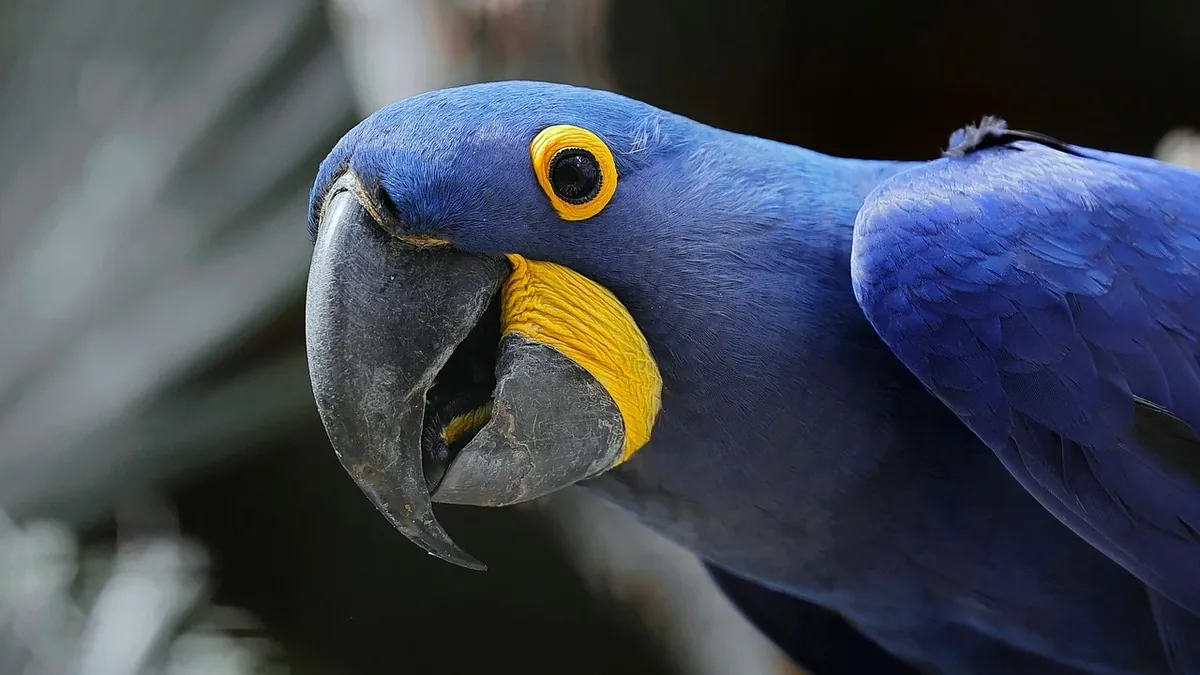
Guacamayo Azul
| Common name | Hyacinth Macaw |
|---|---|
| Scientific name | Anodorhynchus hyacinthinus |
| Country of origin | Brazil, Bolivia, Paraguay |
| First documented | Late 18th century (1790) |
| Original use | Not applicable (wild species) |
| Conservation status | Vulnerable (IUCN) |
| Primary threat | Habitat loss and illegal pet trade |
| Human intervention success | Captive breeding established; reintroduction challenging |
Origin and history
The Guacamayo Azul, commonly known as the Blue Macaw, is native to specific regions within South America. Its historical range was primarily concentrated in the tropical savannas, known as the Cerrado, and palm swamps of central and eastern Bolivia. The species was also documented in adjacent areas of northern Paraguay and potentially far western Brazil. It was first scientifically described by European naturalists in the late 19th century, with formal classification occurring in that period. Historical accounts from explorers and naturalists in the early 20th century note its presence, though never in high densities, across its limited native habitat. Its population history is one of gradual contraction long before the modern era of intensive habitat destruction.
What it was bred for
The Guacamayo Azul is a wild species and was not "bred for" any human purpose in its origin. Its evolutionary traits were shaped by natural selection for survival in its specific ecological niche. Its powerful beak is adapted for cracking the hard nuts of native palm species, which formed a staple of its diet. Its vibrant blue plumage likely plays a role in mate selection and social signaling within the species. Human breeding programs emerged only much later, in the late 20th century, as a conservation response to its critical endangerment. These captive breeding initiatives are aimed solely at species preservation and potential future reintroduction, not for aesthetic or commercial traits.
Life cycle
The Guacamayo Azul is a long-lived parrot species, with individuals in the wild potentially living for several decades. They are believed to form strong, monogamous pair bonds that last for many years, if not for life. Breeding is a slow process, with females typically laying only one or two eggs per clutch. The incubation period lasts approximately one month, and the chicks are altricial, requiring extensive parental care in the nest cavity. Fledging occurs roughly three to four months after hatching, and juvenile birds remain dependent on their parents for an extended period afterward. This slow reproductive rate, combined with low natural population density, makes the species highly vulnerable to any increases in adult mortality.
Character and appearance
The Guacamayo Azul is a large macaw, notable for its striking coloration which is predominantly a vivid turquoise-blue. Its head is a slightly paler blue-grey, and it possesses a large, powerful black beak. The skin around its eyes is bare and yellow, forming a distinctive facial patch. In flight, the underside of its wings and tail reveal a contrasting deep blue or blackish color. Behaviorally, it is described as a social but wary bird, often seen in pairs or small family groups rather than large flocks. Its vocalizations are loud, raucous calls used for long-distance communication across its open habitat.
Pros and cons
A primary pro of human intervention is the establishment of secure captive populations, which have prevented the species' total extinction following its functional extinction in the wild. These programs have generated invaluable scientific knowledge about the macaw's genetics, diet, and breeding biology. However, a significant con is that captive breeding alone cannot address the root causes of decline, namely habitat loss and the illegal pet trade, which persist. A common mistake in conservation has been focusing predominantly on breeding without simultaneously securing and restoring viable, protected wild habitats. Some conservationists regret that early efforts were not more aggressive in establishing protected areas and working with local communities while wild populations still existed. Furthermore, reintroduction efforts face immense challenges, including the scarcity of safe habitat and the difficulty of teaching captive-born birds essential survival skills.
Who it suits
This species suits only the most committed, long-term, and well-funded conservation organizations and governmental agencies. It suits biologists specializing in parrot behavior and ecology who are prepared for the painstaking work of studying and breeding a critically endangered species. It does not suit private pet owners under any circumstances, as it is a protected wild animal ill-suited to captivity outside a conservation context. The effort to save the Guacamayo Azul suits partnerships with local and indigenous communities in its former range who can be stewards of restored habitat. Ultimately, its recovery suits a global conservation ethic that values preserving unique biodiversity, even when the process is slow, expensive, and fraught with setbacks.