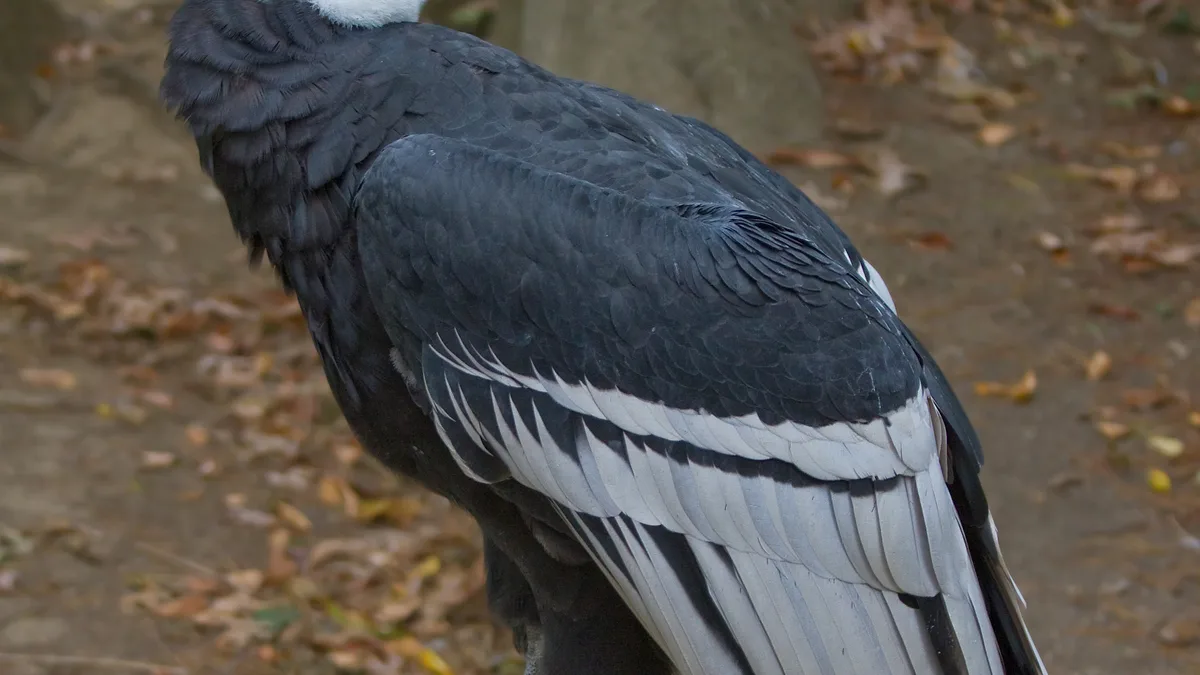
Condor Andino
| Country of origin | South America (Andes mountains) |
|---|---|
| First documented | 16th century by European naturalists |
| Original use | Ecological role as a scavenger |
| Conservation status | Critically Endangered |
| Population trend | Decreasing |
| Primary threats | Habitat loss, poisoning, and hunting |
| Wingspan | Very large (up to 3.3 meters / 10 feet 10 inches) |
| Human intervention success | Captive breeding and reintroduction programs have had limited, localized success. |
Origin and history
The Andean Condor (*Vultur gryphus*) is a large South American bird of prey whose evolutionary history dates back to the Pleistocene epoch. Its origin is firmly rooted in the Andes mountain range, spanning the western coast of South America from Venezuela and Colombia in the north, through Ecuador, Peru, and Bolivia, to Chile and Argentina in the south. The species was first scientifically documented and described by European naturalists in the mid-18th century, with Carl Linnaeus providing its formal binomial classification in 1758. Fossil records indicate its ancestors were present during the last ice age, sharing landscapes with now-extinct megafauna. Historically, its range extended beyond the high Andes to include coastal mountains and lowland deserts, but it has experienced significant range contraction in recent centuries. The condor holds profound cultural significance for pre-Columbian and contemporary Andean societies, often symbolizing power and the celestial realm.
What it was bred for
The Andean Condor is a wild species and was not bred for any human purpose; it is the product of natural selection, not artificial selection. Its morphological and behavioral traits evolved specifically for an ecological role as a specialized scavenger in mountainous and coastal environments. Its immense wingspan and mastery of thermal updrafts evolved for efficient long-distance soaring to locate unpredictable and scattered carrion across vast territories. Its bald head is a hygienic adaptation for feeding inside large carcasses without matting feathers with bacteria-laden matter. Unlike domesticated animals, there is no historical record of systematic captive breeding programs for the condor prior to modern conservation efforts aimed solely at preventing extinction. The concept of being "bred for" a task is therefore inapplicable, as its form and function are solely adaptations to its niche in the wild.
Life cycle
The Andean Condor has one of the slowest reproductive rates of any bird, which significantly impacts its population recovery potential. A mated pair typically produces a single egg every two to three years, with both parents sharing incubation duties for approximately 60 days. The chick is altricial, remaining in the nest cave or ledge for a full six months and dependent on parental care and regurgitated food for an extended period. Fledging occurs at around six months, but the juvenile may remain associated with its parents for up to two years, learning to forage and navigate its territory. Sexual maturity is not reached until the bird is between six and eight years old, and it may not successfully breed for several more years after that. In the wild, individuals that survive to adulthood can live for over 50 years, with some captive individuals exceeding 70, making for a long generation time that hinders rapid adaptation to new threats.
Character and appearance
The Andean Condor is among the world's largest flying birds by combined measurement of weight and wingspan, with wings stretching over 3 meters (10 feet). Adults are primarily black with distinctive white ruff feathers at the base of the neck and large white patches on the upper wings, visible in flight. Males are larger than females and possess a fleshy caruncle or comb on the crown, as well as dark irises, while females have red eyes and lack the prominent comb. Its character in the wild is that of a cautious, social scavenger, often gathering in groups at carcasses but displaying a strict hierarchical feeding order based on age and sex. Despite its formidable size, it is not a proficient predator; its feet are adapted for walking and perching rather than grasping live prey, reflecting its reliance on carrion. The condor is generally silent, lacking a syrinx, but can produce hisses and grunts, with its imposing presence communicated through physical posturing and flight.
Pros and cons
The primary "pro" of human intervention, specifically through captive breeding and release programs, is the demonstrable prevention of immediate regional extinction in countries like Venezuela, Colombia, and Ecuador. Intervention provides a controlled environment to ensure reproductive success, bypassing the threats of poisoning, hunting, and habitat disturbance that decimate wild nests. It also allows for veterinary care, monitoring, and public education, fostering cultural reconnection and support for the species. The significant "cons" are that such programs are extraordinarily costly, labor-intensive, and long-term, requiring decades of commitment with no guaranteed success for establishing self-sustaining wild populations. A common mistake is releasing birds without adequately mitigating the original threats, leading to the rapid loss of expensive, hand-reared individuals to the same human-caused dangers. Furthermore, heavy intervention risks creating condors habituated to humans, potentially altering natural behaviors and social structures, and can divert resources from broader ecosystem conservation that would benefit the species and its habitat holistically.
Who it suits
Intensive human intervention suits situations where a wild population has been driven to a critical threshold, typically fewer than a dozen breeding pairs, and faces irreversible decline without direct action. It suits governments and conservation NGOs with secure, multi-decade funding and institutional stability to manage the complex logistics of captive breeding, hacking techniques, and post-release monitoring. This approach suits landscapes where the primary causes of decline, such as direct persecution or lead poisoning from ingested ammunition, are being actively and effectively mitigated through parallel legal and community engagement programs. It does not suit regions where habitat loss is rampant and unchecked, or where political will is absent, as released condors would have no secure future. Ultimately, this level of intervention suits a species that is a cultural flagship, as the condor is, where its plight can mobilize significant public and financial support for a last-chance rescue effort.