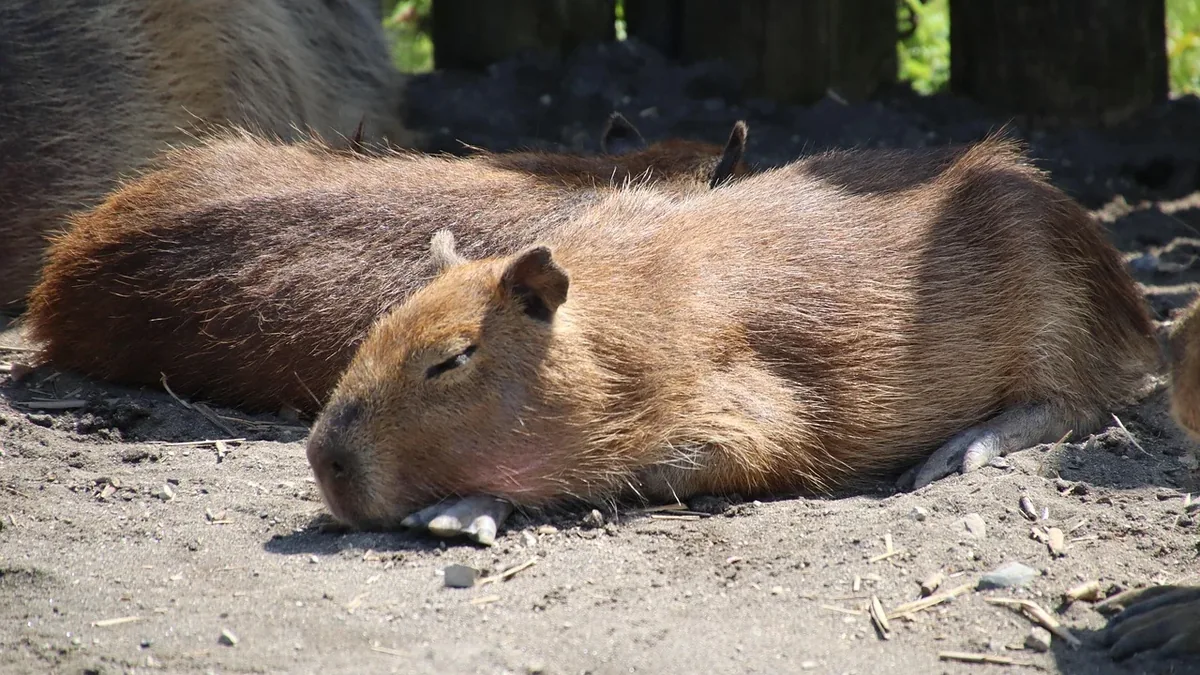
Carpincho
| Common name | Capybara |
|---|---|
| Scientific name | Hydrochoerus hydrochaeris |
| Country of origin | South America |
| First documented | 16th century (by European naturalists) |
| Original use | Wild species, not domesticated |
| Size | Largest living rodent |
| Habitat | Semi-aquatic, near rivers and wetlands |
| Conservation status | Least Concern (IUCN) |
Origin and history
The carpincho, also known as the capybara, is a wild rodent species native to South America. Its historical range extends across most of the continent east of the Andes, encompassing countries such as Venezuela, Colombia, Brazil, Argentina, Uruguay, Paraguay, Bolivia, and Peru. Fossil records indicate that ancestors of modern capybaras have existed for millions of years, with the genus Hydrochoerus appearing in the Pleistocene epoch. The species was first documented scientifically by European naturalists in the late 16th century, following colonial exploration of the New World. Indigenous peoples across its range have co-existed with and utilized the carpincho for centuries, long before formal scientific classification. Its history is intrinsically linked to the wetlands, rivers, and savannahs of South America, where it evolved as the world's largest rodent.
What it was bred for
The carpincho is a wild animal and, as such, was not selectively bred for human-defined purposes like domesticated livestock or pets. Its evolutionary traits were shaped by natural selection for survival in semi-aquatic environments. In some regions of South America, particularly in Venezuela and parts of the Amazon basin, there have been historical and contemporary efforts to ranch or farm capybaras for their meat and hide. This practice, known as "carpincho farming," attempts to utilize a species already adapted to the local ecosystem for sustainable production. The primary commercial products from these operations are the lean meat, which is consumed locally, and the distinctive leather, which is valued for its durability and texture. These farming initiatives represent a human-directed application of the animal, not a result of its ancestral breeding. The species' natural herbivorous diet and social structure are leveraged, rather than altered, in these managed settings.
Life cycle
Capybaras are born in litters typically ranging from two to eight pups, after a gestation period of approximately 150 days. Newborns are precocial, able to walk and even swim shortly after birth, and begin grazing on grass within the first week. Alloparenting is common, with females in the social group often nursing pups other than their own. Juveniles reach sexual maturity at around 18 months to two years of age, though this can vary with environmental conditions and population density. In the wild, their average lifespan is 6 to 10 years, though they can live longer in captivity, with some individuals reaching 12 years. Their life cycle is heavily dependent on access to water and stable social structures within herds, which provide protection from predators such as jaguars, caimans, and anacondas.
Character and appearance
The carpincho has a distinctive, barrel-shaped body covered in coarse, brittle hair that varies in color from reddish-brown to grayish-brown. An adult typically stands about 50-60 centimeters tall at the shoulder and can weigh between 35 and 65 kilograms, with some exceptionally large specimens recorded. Its face is blunt, with small ears and eyes positioned high on the head, and its large, ever-growing incisors are visible. The character of the carpincho is generally described as gregarious and placid; it lives in stable social groups usually consisting of 10 to 20 individuals, though larger aggregations are common in the dry season. It is an excellent swimmer, with partially webbed feet and the ability to remain submerged for up to five minutes to evade threats. Its demeanor is often one of wary calmness, spending much of its time grazing on grasses and aquatic plants or resting in wallows.
Pros and cons
A primary pro of the carpincho's existence is its role as a keystone species in its ecosystem, influencing vegetation growth and providing a food source for numerous predators. Its social and generally non-aggressive nature makes it a species of interest for ecotourism and wildlife observation. A significant con is its frequent conflict with human agriculture, as it can raid crops like rice, sugarcane, and melons, leading to its persecution as a pest animal. In regions where it is hunted or farmed, concerns arise over welfare standards and the potential for overexploitation if management is not science-based. A common mistake in human intervention is the translocation or removal of individuals from problem areas, which often simply shifts the conflict to a new location and disrupts the social stability of both the removed and resident groups. Many well-intentioned rehabilitation efforts fail because they underestimate the species' complex social needs, leading to released individuals being unable to reintegrate and suffering high mortality.
Who it suits
The carpincho suits a specific ecological niche as a semi-aquatic herbivore, thriving only in environments with permanent water sources and ample grassland or riparian vegetation. It suits conservation programs that prioritize large, interconnected wetland habitats and recognize the importance of apex predators to maintain natural population balances. The species does not suit private pet ownership or casual captivity, as its social, spatial, and dietary requirements are impossible to meet adequately in a typical domestic setting. Managed, sustainable harvesting through regulated ranching may suit certain local economies in South America, provided it operates under strict ecological and ethical guidelines. Ultimately, the carpincho suits a world where wild spaces are preserved and human expansion is carefully managed to minimize conflict, as its survival is intrinsically tied to the health of entire aquatic ecosystems.