Polar Bears Destroy Alaskan Seabird Colonies
A new study documents polar bears, driven ashore by melting sea ice, devastating seabird colonies in Alaska. A single bear destroyed 89% of a Common Eider colony in one day, a behavior now confirmed across the Arctic.
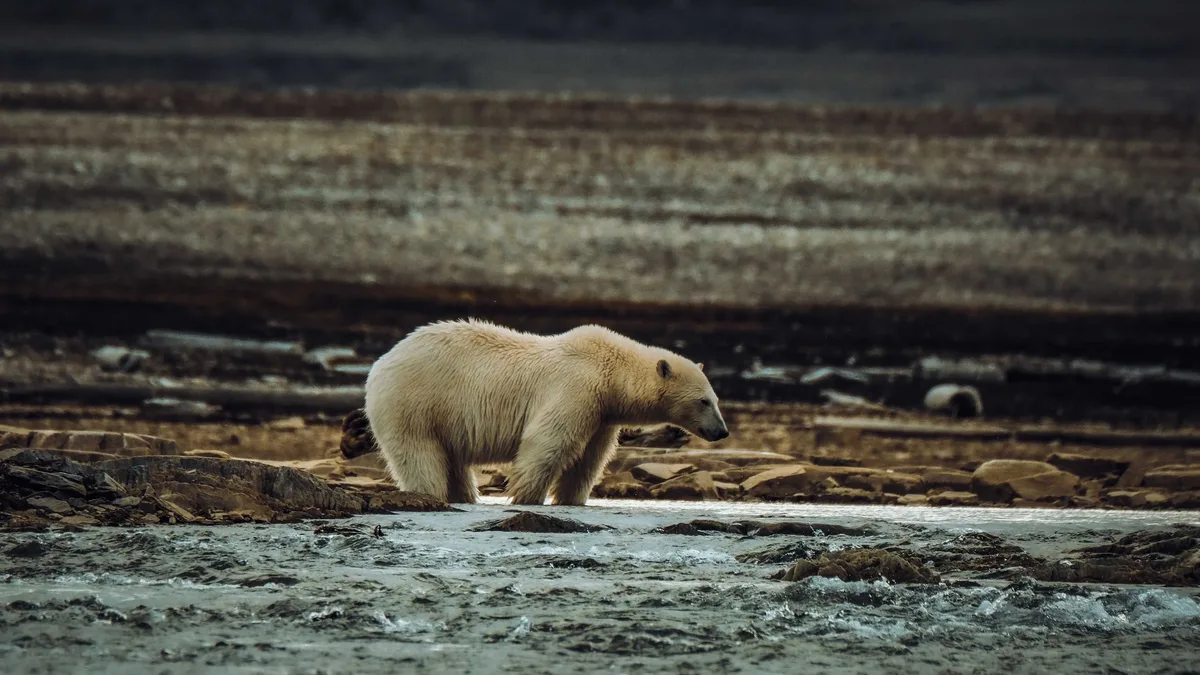
In July 2024, a single polar bear wiped out 89 percent of a Common Eider nesting colony on Alaska's Spy Island in less than 24 hours. This event, detailed in a new scientific paper, provides the first report of large-scale polar bear predation on seabirds in Alaska, confirming a trend observed across the warming Arctic.
As summer sea ice declines, polar bears are losing their primary hunting platform for seals. This forces them onto land, where they increasingly forage for seabird eggs, nestlings, and adults. While not new, researchers are observing this behavior more frequently from the Canadian Arctic to Greenland and Svalbard.
A Sixfold Increase in Bears on Land
On Alaska's north coast, low tundra is fronted by barrier islands in the Beaufort Sea. These islands are critical, fox-free nesting grounds. Historically, polar bears rarely appeared here in summer. Over the past 20 years, however, their numbers on these shores have increased sixfold as sea ice has melted. Nests on small islands are now highly vulnerable, where one or two bears can devastate an entire colony.
The new paper, co-authored by Wildlife Conservation Society ecologist Kayla Shively and published in Polar Research, reports on the impacts on two specific colonies.
Two Colonies Under Siege
The study focuses on Cooper Island's Black Guillemots and Spy Island's Common Eiders. The table below summarizes the predation events documented in the research.
| Colony Location | Bird Species | Key Predation Events |
|---|---|---|
| Cooper Island | Mandt's Black Guillemot | 2008-2010: Bears killed nearly half of all nestlings. 2024 & 2025: Bears caused complete reproductive failure. |
| Spy Island | Pacific Common Eider | 2016 & 2017: Bears destroyed 11% of over 200 monitored nests. July 2024: One bear destroyed 89% of nests in under 24 hours. |
Ornithologist George Divoky began observing the Cooper Island guillemot colony in 1975, when bear predation was rare. Researchers later installed bear-proof nest cases, but bears learned to break them open, even submerging them to flush out adults. The colony now faces likely extinction due to multiple climate threats.
On Spy Island, Pacific Common Eiders nest in driftwood and dunes. Females of this, the Northern Hemisphere's largest sea duck, spend more time on their nests than any other waterfowl, says Shively. Reports of bear predation here were also rare from the 1970s until recently.
A Fragile and Interconnected System
For these species overall, polar bears are not an existential threat. Don Lyons, director of conservation science at Audubon's Seabird Institute, notes most Arctic seabirds are not at risk of extinction in the next 50 years, but they face real challenges and could become endangered in that timeframe.
Many challenges are climate-driven. Sea ice loss increases storm surges and erosion, shrinking eider nesting grounds. Warmer waters mean fewer Arctic cod for guillemots. Compared to these, polar bears may be a short-term problem for an unfortunate reason. Biologist Andrew Derocher says the southern Beaufort Sea polar bear population is "hanging on by a claw" and may not exist there in 50 years.
Polar bears will not switch to a wholly bird-based diet; it is not calorie-efficient. An adult bear needs about 54 Common Eider eggs to meet its daily energy requirement. The Spy Island bear ate about 255 eggs, equivalent to a yearling ringed seal and enough food for less than five days.
The ecological web is complex. Some birds rely on polar bears for food, scavenging seal leftovers. "There's a whole trophic cascade that comes from taking sea ice out of an ecosystem," Derocher says. The system is fragile. Each year, sea ice loss is directly proportional to human-caused fossil fuel emissions. For bears and birds alike, the future hinges on global climate action.