Rare plant presumed extinct in Sri Lanka
A plant species last recorded in Sri Lanka in 1855 has been found in a lowland forest fragment. Researchers located 70-100 individuals of Indianthus virgatus in January 2025.
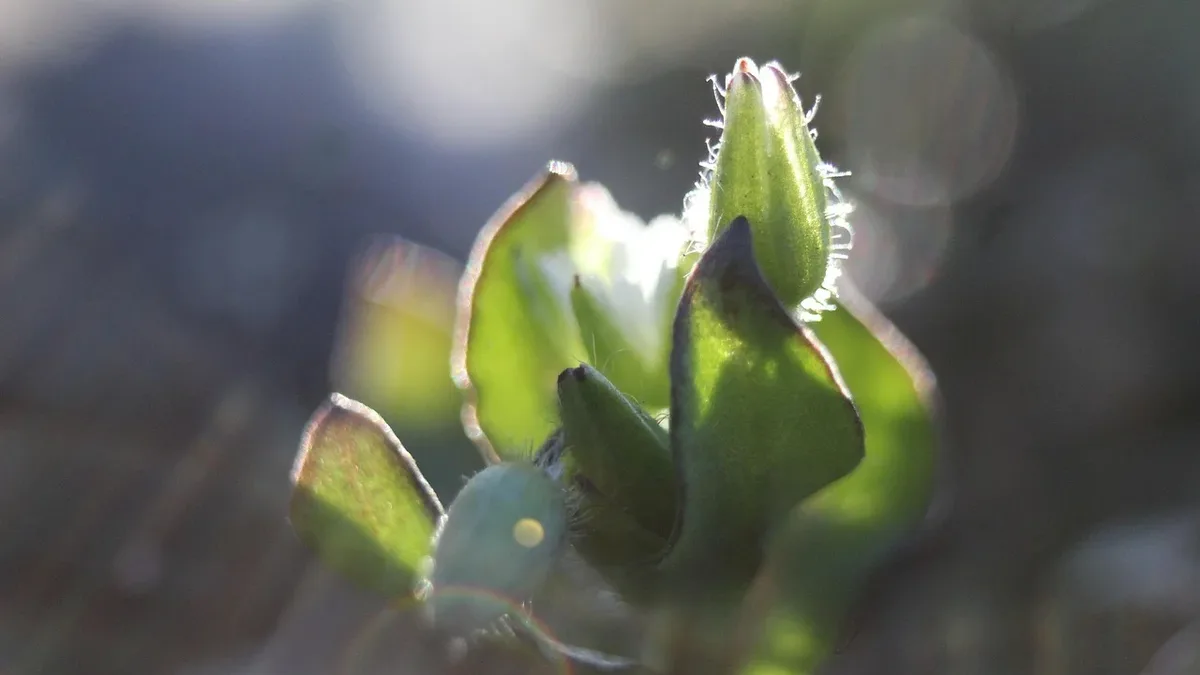
Researchers have rediscovered a population of an extremely rare plant in Sri Lanka, 170 years after its last verified record. The species, Indianthus virgatus, was found in a lowland forest fragment along the Sitawaka Ganga River in January 2025, according to a recent study documented by the team.
I. virgatus is officially listed as critically endangered in Sri Lanka but was presumed possibly extinct in the wild there. The only previous Sri Lankan record was from a specimen collected in 1855. The plant, which bears small white flowers, grows in the understory of wet tropical forests.
The Search and Discovery
The research team used historical records and predictive habitat modeling to target their search in southwestern Sri Lanka's Sabaragamuwa Province. They successfully located a small population of 70 to 100 individuals. This site matched an area their models had predicted would be highly suitable for the species.
Study coauthor Vivek Pandi, an assistant professor of ecology at Manipal Academy of Higher Education in India, explained the species' significance to Mongabay. I. virgatus is the only species within its genus, giving it unique evolutionary context. Its occurrence is disjunct across the Indian subcontinent and Sri Lanka, with populations separated by a large geographical gap.
This distribution raises an intriguing question. Pandi said researchers wonder if an ancient geological event split a once-continuous population, or if the species reached Sri Lanka later through long-distance dispersal.
Survival in Micro-Refugia
Though the plant went unrecorded for 170 years, the researchers believe it survived undetected in sheltered forest pockets. Pandi identified these areas as small remnants of moist, shaded forest, typically around streams and sheltered slopes. Such spots can retain stable microclimatic conditions even when the surrounding landscape is severely disturbed.
“The rediscovery of I. virgatus highlights why these seemingly small and isolated forest remnants can be important for conserving poorly known species,” Pandi said.
Protection is urgent. The study notes most of the plant's suitable habitats in Sri Lanka have been destroyed by tea and rubber plantations. Populations in India's Western Ghats also face habitat-related threats, Pandi added.
Conservation Path Forward
The study's authors outline a needed conservation strategy. Effectively safeguarding the newly found population will require immediate local habitat protection combined with efforts to establish collections at national botanical gardens.
They also state that the conservation status of I. virgatus needs assessment for the IUCN Red List. This step would allow its protection to be integrated into national and regional biodiversity action plans. The rediscovery underscores the critical conservation value of fragmented forest patches acting as micro-refugia.